

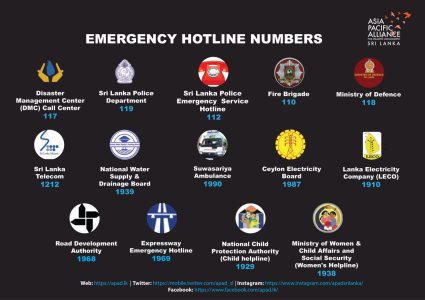
Sri Lanka faces an increased risk of heavy rainfall, flash floods and landslides over the coming days as a low-pressure system developing over the Bay of Bengal could intensify into a cyclonic storm, according to the Asia Pacific Alliance for Disaster Management Sri Lanka (A-PAD SL).
In a weather alert issued on Friday (13), based on updates from the Department of Meteorology, A-PAD SL said a low-pressure area had developed over the southeastern Bay of Bengal and was expected to intensify into a depression around November 15.
The system could strengthen further into a cyclonic storm over the central Bay of Bengal around November 16.
Sri Lanka is expected to experience increased rainfall from November 14 and 15 and in the following days, particularly in the Northern, North Central, North Western, Western and Eastern provinces.
A-PAD SL warned that Sri Lanka could face severe impacts if the depression moves northward along the island’s eastern coast. However, the organisation stressed that the exact track and intensity of the weather system remain uncertain.
The alert said the risk of flash flooding and landslides were particularly high because soil across much of the country was already saturated following heavy rainfall over the past week.
Approximately 17 major reservoirs were reported to be at spill level last week, while landslide early warnings had been issued for seven districts since November 12.
According to the advisory, intense rainfall over short periods could trigger flash floods with little or no warning, particularly in low-lying urban areas, locations near rivers and canals, reservoir spillways and hilly regions.
Thundershowers could also bring gusty winds of 60 to 70 km/h and lightning, while sea conditions off the northern and eastern coasts could become rough.
A-PAD SL urged businesses and the public to take precautionary measures, including clearing drainage systems, moving vehicles and valuable equipment to higher ground, and avoiding travel through floodwaters.
The organisation also advised people to monitor official weather forecasts and comply with evacuation instructions issued by the Disaster Management Centre.
Further updates are expected as meteorological authorities gather more information about the system’s movement and intensity. (Newswire)