

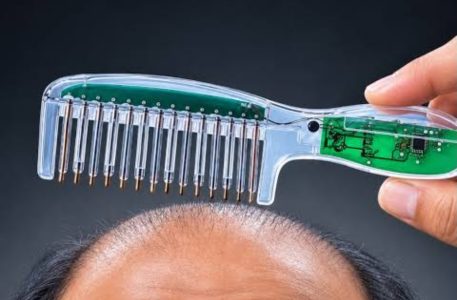
Chinese scientists have developed an innovative electronic comb capable of stimulating hair regrowth, achieving nearly 98% hair coverage in laboratory mice within just 28 days, raising hopes for a new treatment for baldness.
The experimental device, named Detangle, was developed by researchers from Beihang University in Beijing in collaboration with scientists from the City University of Hong Kong.
According to a study published in the scientific journal Nature Communications on November 3, the device combines gentle electrical stimulation with the delivery of therapeutic molecules directly to hair follicles.
Unlike conventional hair-loss treatments that rely mainly on topical medications, the electronic comb uses specially designed teeth containing tiny electrodes to generate electrical pulses while passing through the hair.
The electrical stimulation helps therapeutic molecules penetrate deeper into the skin and reach hair follicles more effectively.
Researchers tested the device on mice experiencing experimentally induced androgenetic alopecia, commonly known as pattern hair loss.
After 28 days, mice receiving the combined electrical stimulation and therapeutic treatment achieved approximately 97.85% hair coverage in the treated area.
In comparison, mice treated with minoxidil, one of the most widely used medications for hair loss, achieved approximately 70% coverage during the same experimental period.
The findings suggest that the new technology could offer a more effective approach to stimulating hair growth than conventional topical treatments, although the results have so far been demonstrated only in animals.
The research team designed the comb to make hair-loss treatment potentially more convenient by incorporating the technology into an everyday grooming activity.
The device’s specially engineered electrodes generate electrical fields that penetrate deeper towards the hair follicles, improving the delivery of therapeutic compounds.
Researchers believe the combination of electrical stimulation and targeted molecular treatment could help address biological processes associated with hair loss.
However, scientists have cautioned that the device remains experimental and has not yet been clinically proven to restore hair in humans.
Further studies and human clinical trials will be required to establish its safety, effectiveness and long-term results before it can be considered for widespread medical use.
The development represents a promising step in research into treatments for androgenetic alopecia, a condition affecting millions of people worldwide. (Newswire)