

The UN Special Rapporteur on the independence of judges and lawyers has raised concerns over Sri Lanka’s proposed constitutional amendment to increase the retirement age of superior court judges, warning that the move could affect judicial independence and public confidence in the judiciary.
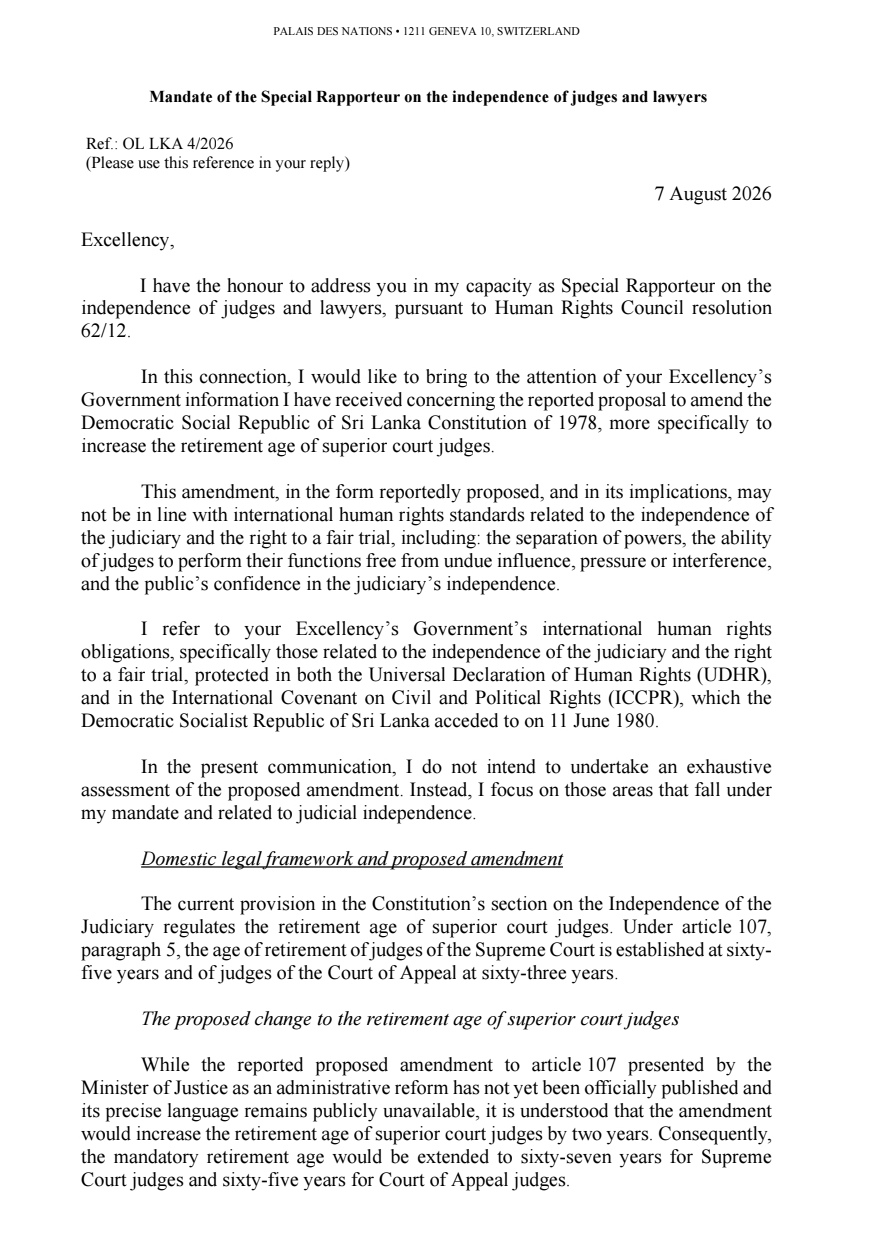
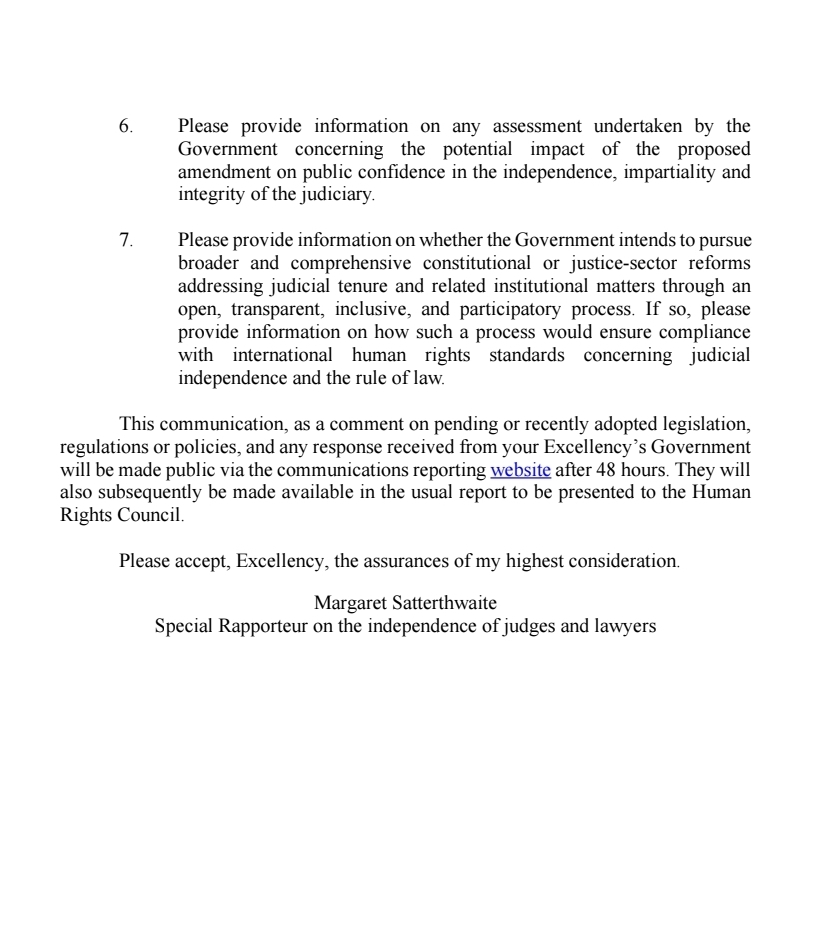
In a communication dated August 7 addressed to the Sri Lankan Government, Special Rapporteur Margaret Satterthwaite said the proposed amendment, in its reported form, may not be consistent with international human rights standards relating to judicial independence and the right to a fair trial.
The proposal would increase the mandatory retirement age of Supreme Court judges from 65 to 67 and Court of Appeal judges from 63 to 65. The Special Rapporteur noted that the proposed changes would reportedly apply to sitting judges rather than only to judges appointed in the future.
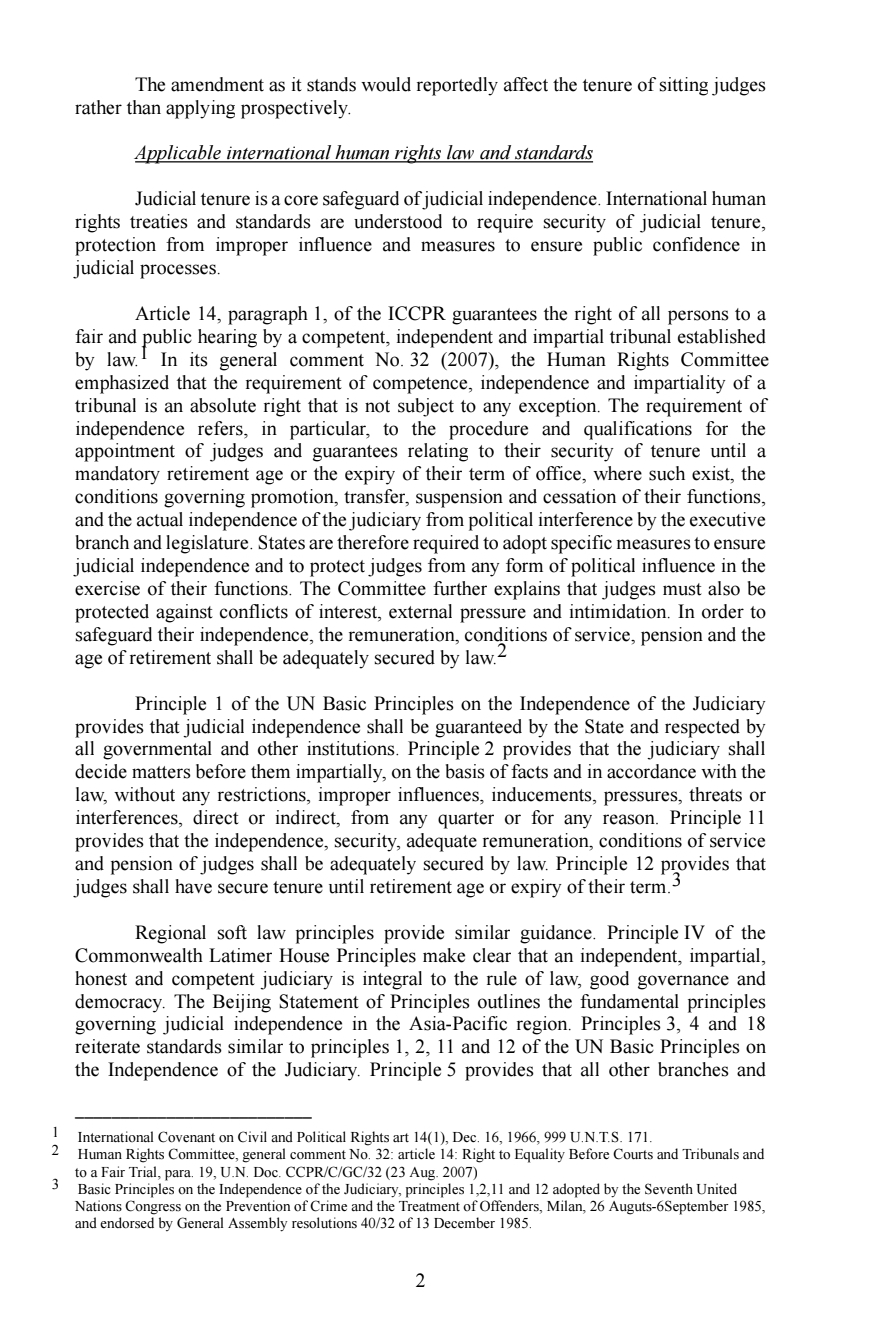
Satterthwaite acknowledged that increasing the retirement age could be justified on grounds such as preserving judicial expertise and ensuring institutional continuity. However, she said reforms affecting judicial tenure require meaningful debate, discussion and strong safeguards because of the judiciary’s role in reviewing executive and legislative power.
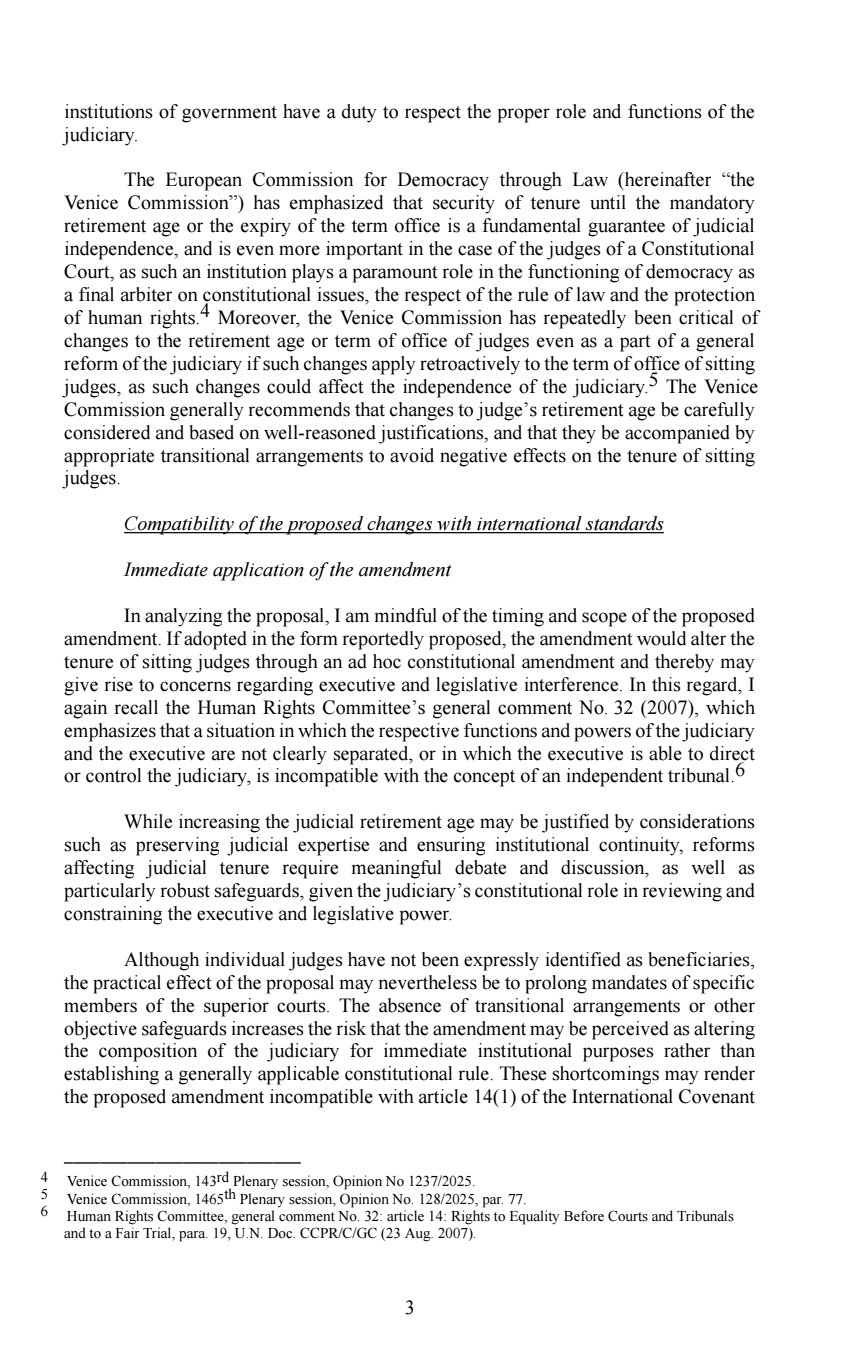
She warned that although individual judges had not been expressly identified as beneficiaries, the practical effect of the amendment could extend the tenure of specific members of the superior courts.
According to the communication, the absence of transitional arrangements or other objective safeguards could create a perception that the amendment is intended to alter the composition of the judiciary for immediate institutional purposes rather than establish a generally applicable constitutional rule.
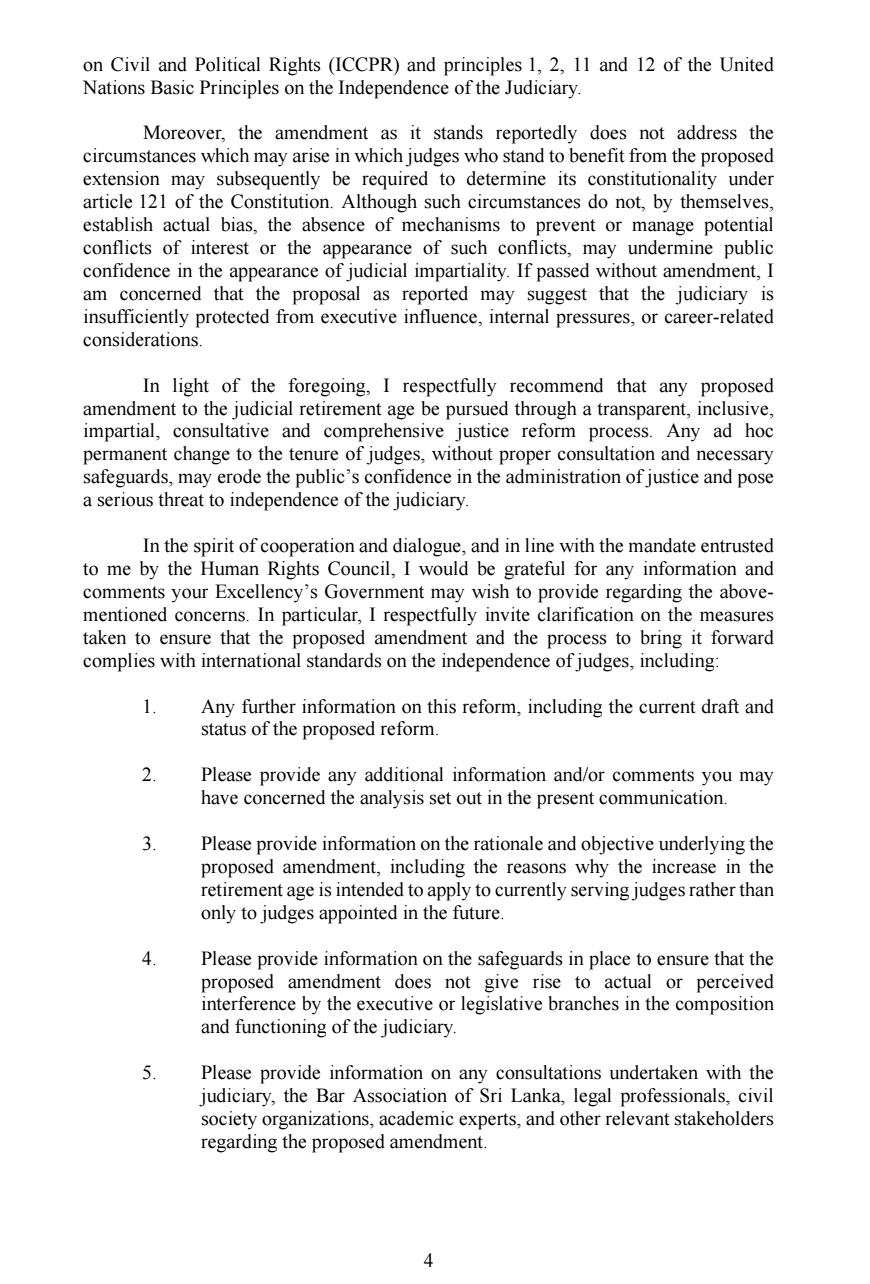
The Special Rapporteur also raised concerns over a potential conflict of interest if judges who stand to benefit from the extension are subsequently required to determine the constitutionality of the amendment. While this would not in itself establish actual bias, she said the absence of mechanisms to address actual or perceived conflicts could undermine public confidence in judicial impartiality.
She recommended that any change to the judicial retirement age be undertaken through a transparent, inclusive, impartial, consultative and comprehensive justice reform process, warning that an ad hoc change without adequate consultation and safeguards could pose a serious threat to judicial independence.
The Sri Lankan Government has also been requested to provide information on the rationale for applying the proposed increase to currently serving judges, safeguards against actual or perceived executive or legislative interference, and consultations conducted with the judiciary, the Bar Association of Sri Lanka, legal professionals, civil society and academics. (Newswire)