
The Sri Lankan government has failed to adequately answer key concerns raised by the UN Special Rapporteur on the Independence of Judges and Lawyers over the proposed extension of the retirement age of superior court judges, according to an analysis by SJB MP and Attorney-at-Law Ajith P. Perera.
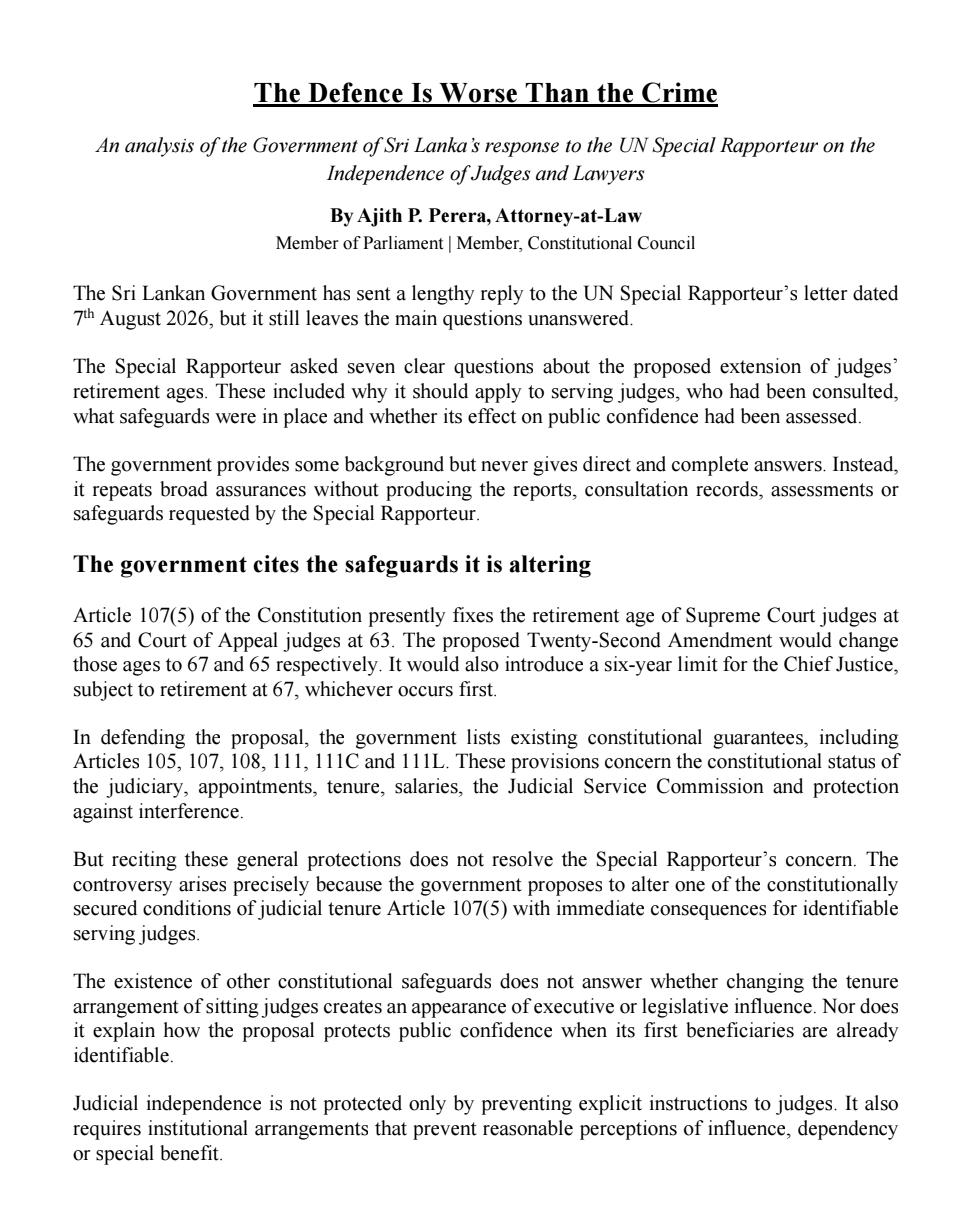
In a document titled “The Defence Is Worse Than the Crime,” Perera said the government’s lengthy response to the Special Rapporteur’s Aug. 7 letter leaves several of the central questions unanswered.
The proposed 22nd Amendment seeks to increase the retirement age of Supreme Court judges from 65 to 67 and Court of Appeal judges from 63 to 65. It would also introduce a six-year term limit for the chief justice, subject to retirement at 67, whichever comes first.
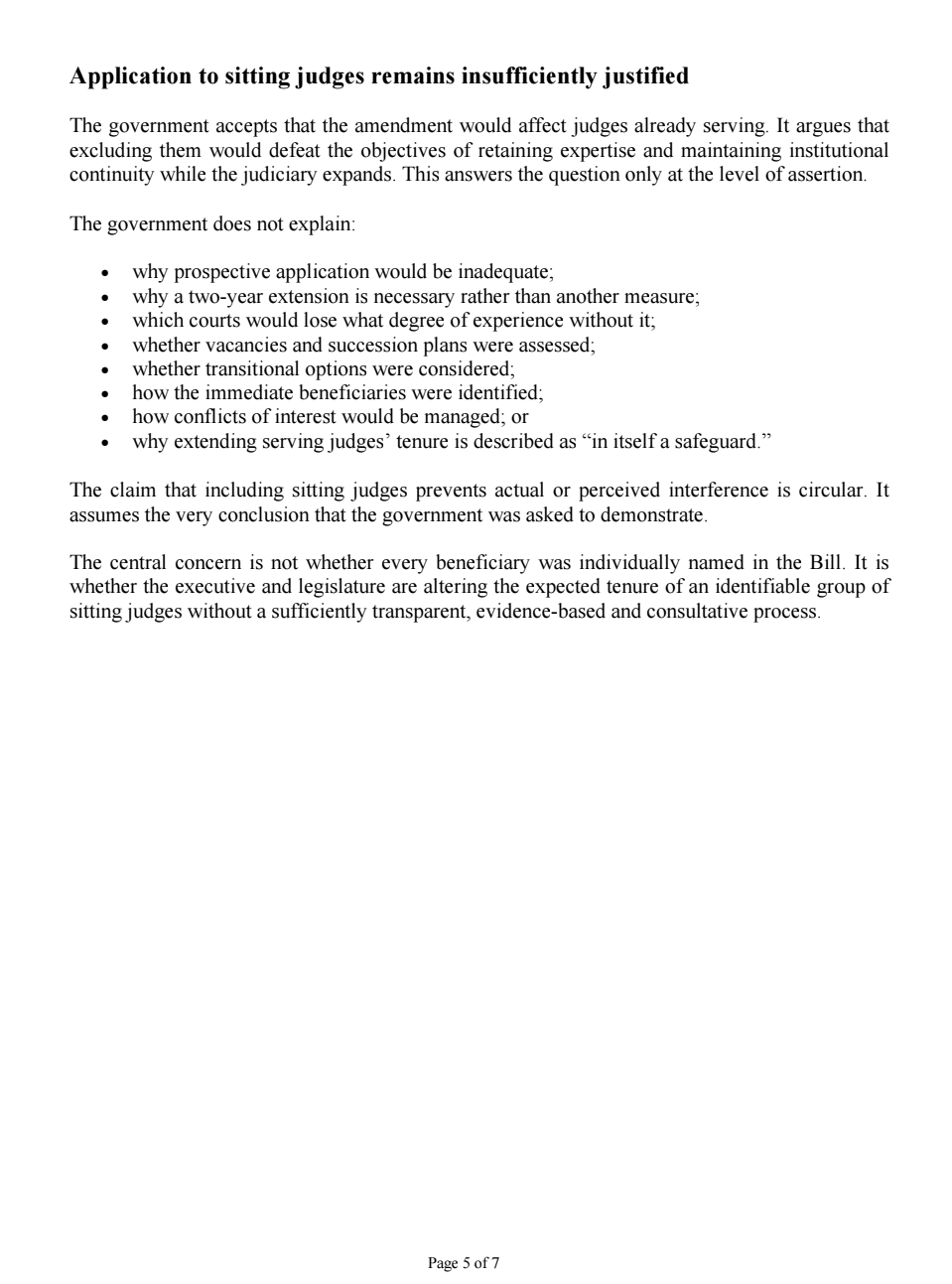
Perera, who is also a member of the Constitutional Council, said the government had cited existing constitutional protections for judicial independence but had not adequately addressed concerns over changing the tenure arrangements of judges who are already serving.
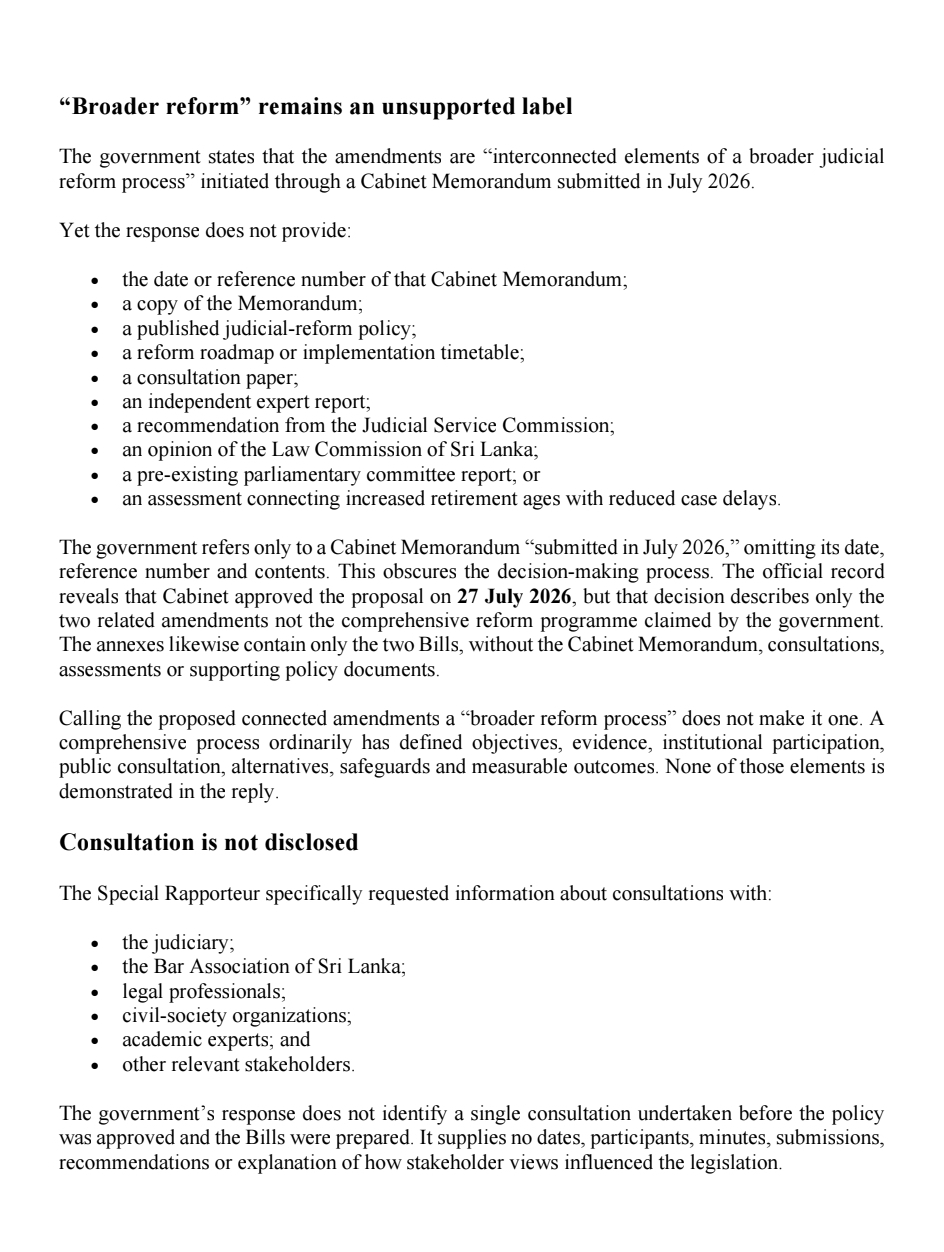
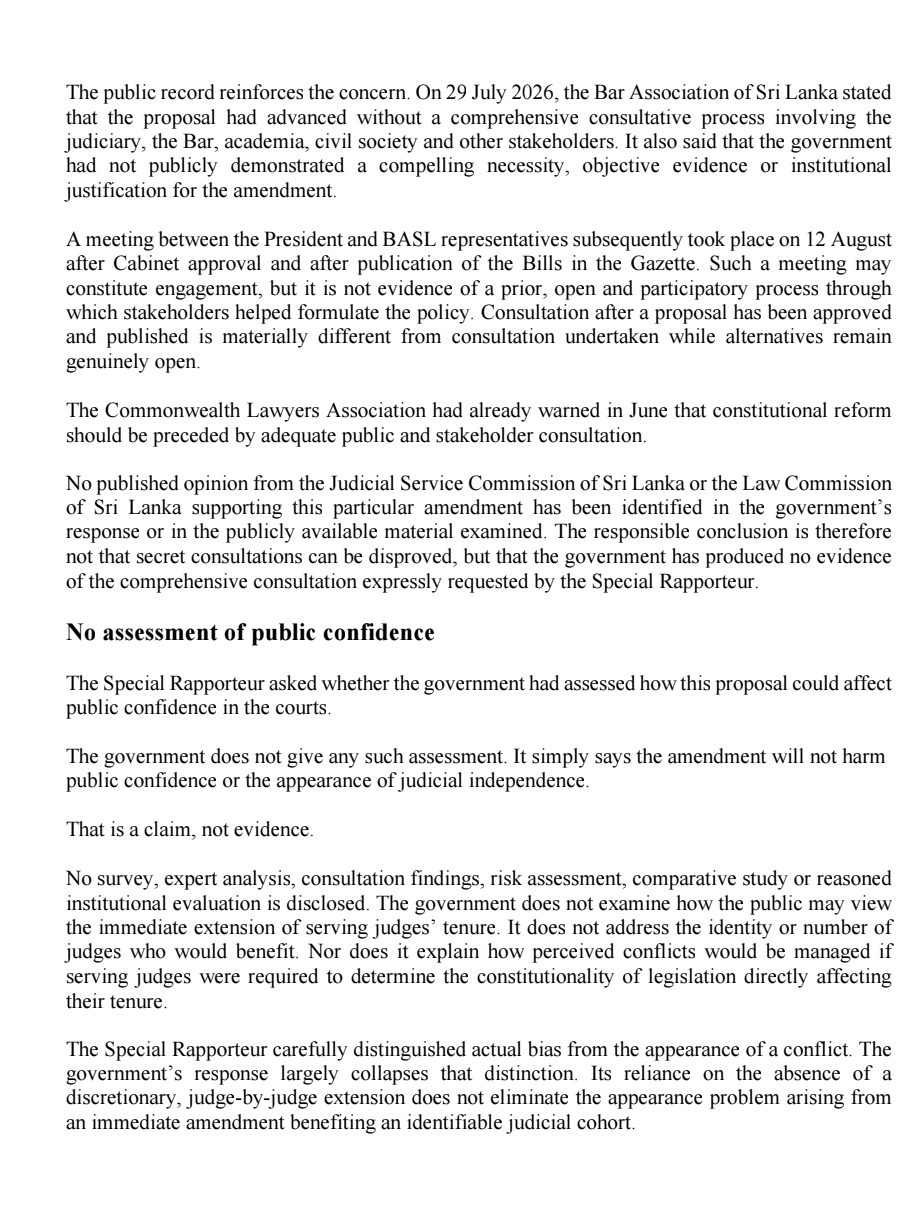
He argued that the government had also failed to provide evidence of a comprehensive consultation process before the proposal was approved, including consultations with the judiciary, Bar Association of Sri Lanka, legal professionals, civil society and academics.
According to Perera, a meeting between President Anura Kumara Dissanayake and BASL representatives took place on Aug. 12, after Cabinet approval and the publication of the Bills in the Gazette. He argued that such engagement was different from consultation conducted before a policy decision was finalized.
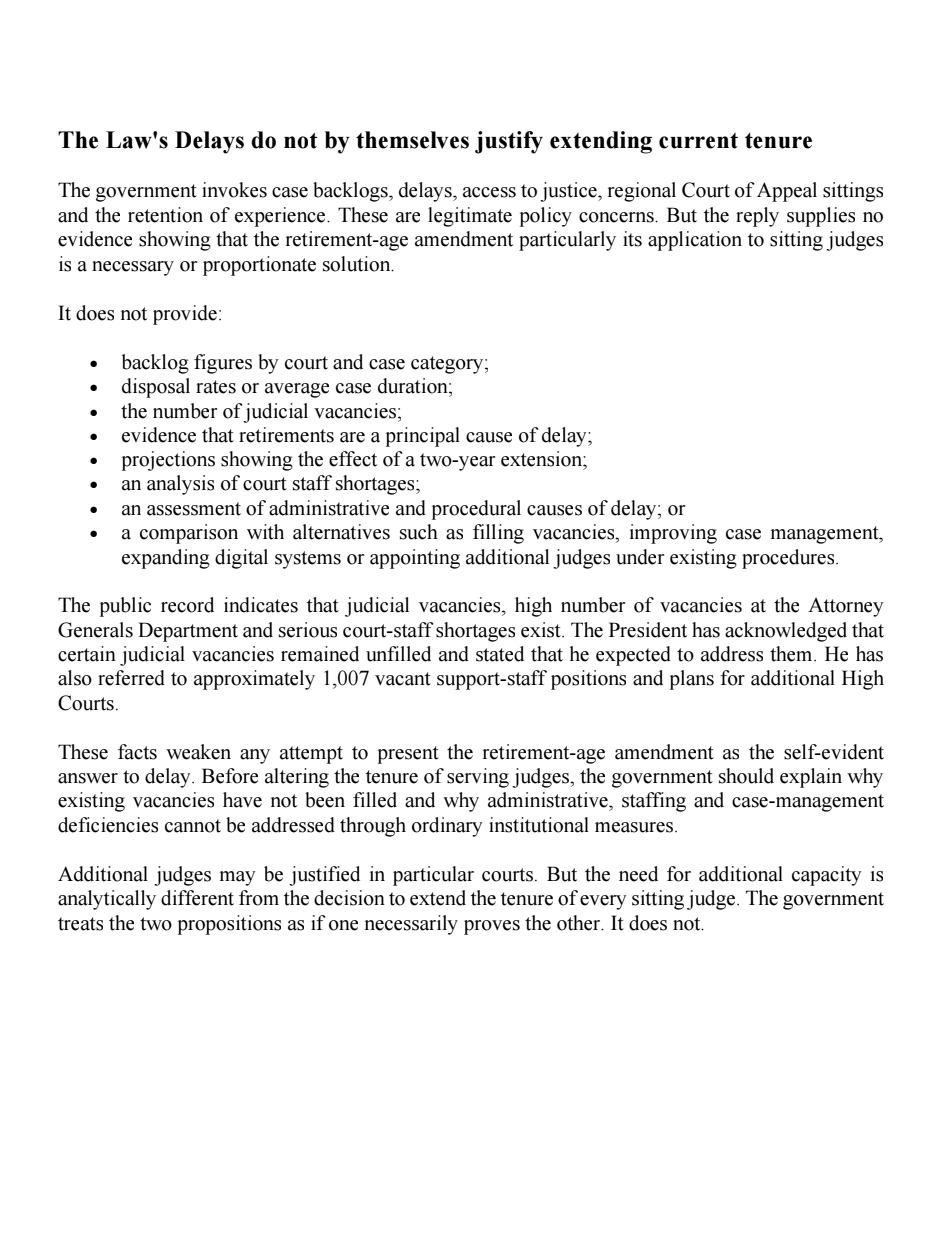
The analysis also questioned the government’s reliance on court backlogs and the need to retain judicial experience as reasons for extending retirement ages. Perera said the response did not provide figures or analysis demonstrating that extending judges’ tenure by two years would significantly reduce delays.
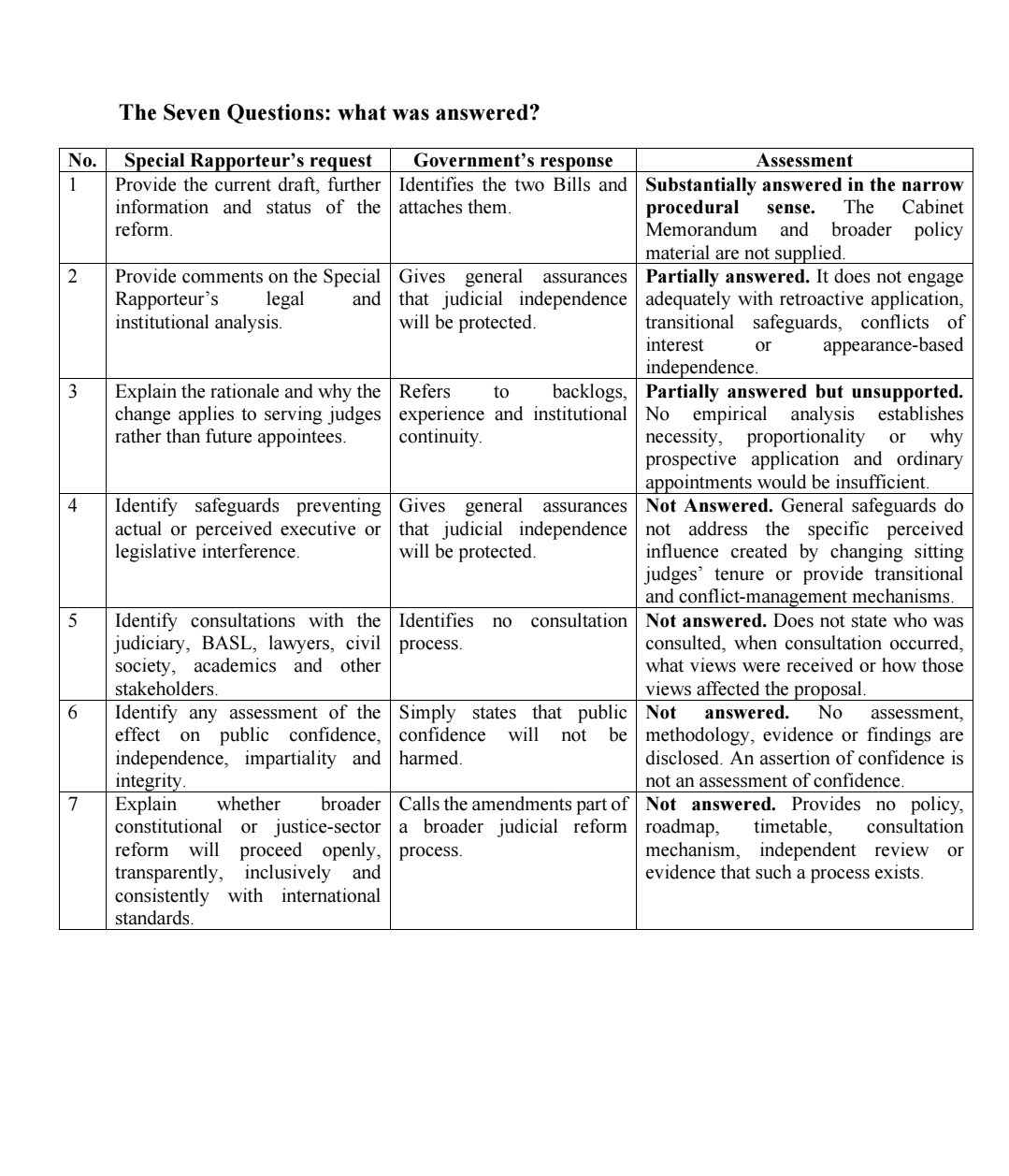
Assessing the seven questions raised by the Special Rapporteur, Perera concluded that only the first — relating to the current draft and status of the reform — had been substantially answered in a narrow procedural sense. He classified two others as partially answered and the remaining four as unanswered.
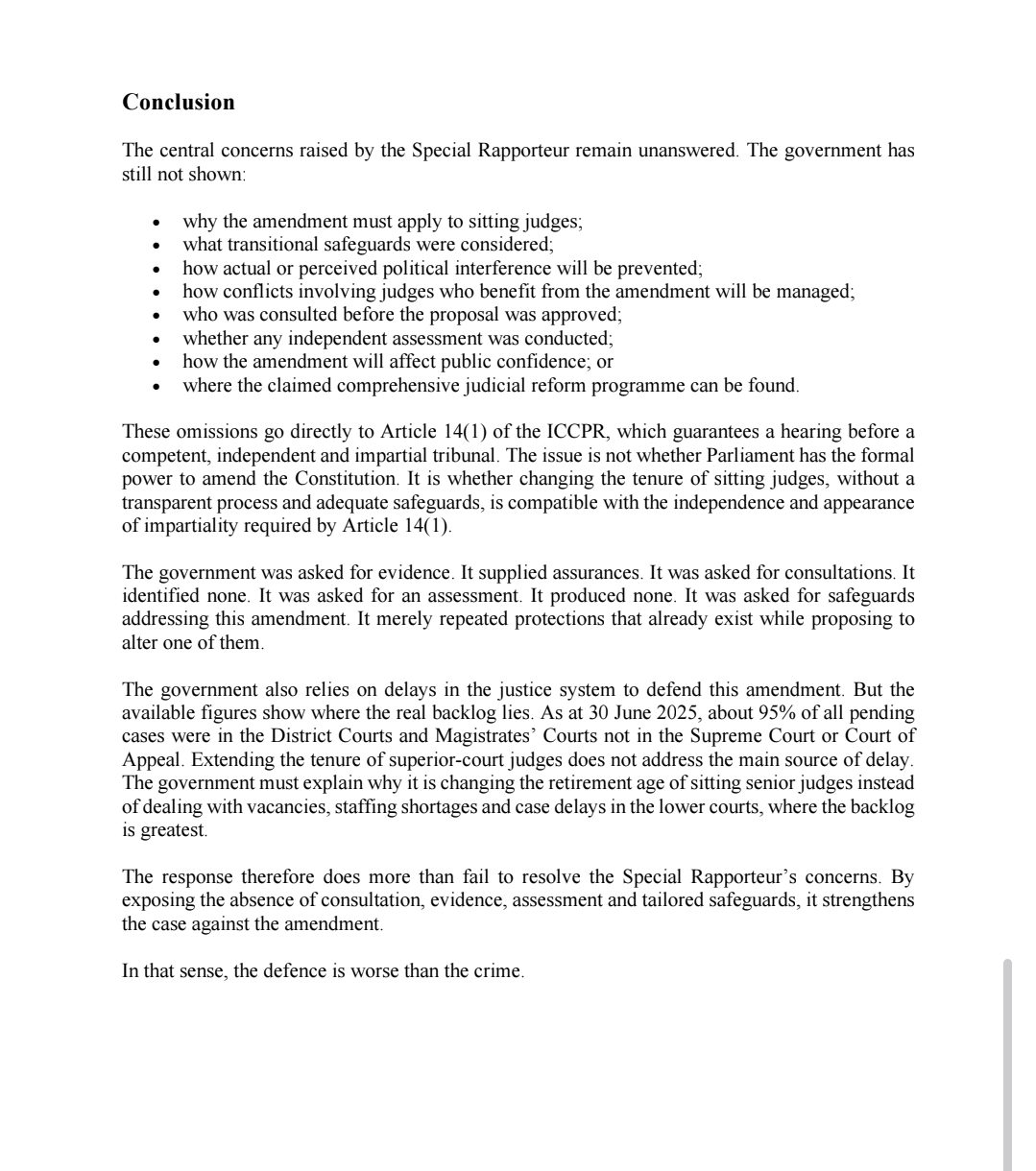
Perera further claimed that about 95% of pending cases as of June 30, 2025, were in District Courts and Magistrates’ Courts rather than the Supreme Court or Court of Appeal, arguing that extending the tenure of superior court judges would therefore not address the main source of the case backlog.
“The government was asked for evidence. It supplied assurances. It was asked for consultations. It identified none,” Perera said in his analysis, concluding that the government’s response had strengthened rather than resolved concerns surrounding the proposed amendment. (Newswire)