

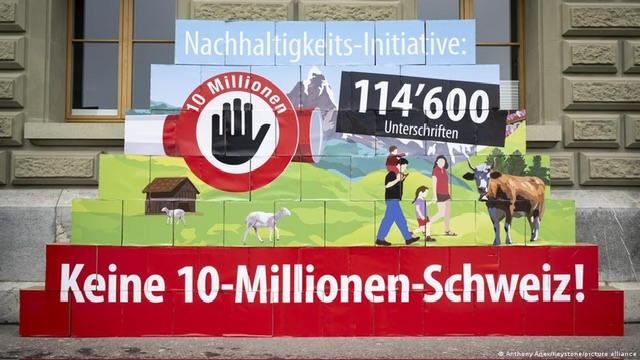
Switzerland will vote on Sunday in a closely watched referendum that could impose a legal cap on the country’s population at 10 million, a proposal that has intensified debate over immigration, public services and Switzerland’s relationship with Europe, according to BBC News.
The initiative, backed by the right-wing Swiss People’s Party, is described by supporters as a “sustainability initiative” aimed at reducing pressure on housing, infrastructure, public services and the environment. However, critics argue it is a rebranded anti-immigration measure that would significantly restrict migration into the country.
Opponents, including the Swiss government, other political parties, business groups and trade unions, have labelled it a “chaos initiative”, warning it could worsen labour shortages in key sectors such as healthcare and hospitality, damage relations with the European Union, and risk isolating Switzerland economically and politically.
Switzerland’s population has risen from 7.3 million in 2002 to around 9.1 million today, with approximately 27% of residents born abroad. The country’s system of direct democracy allows citizens to force nationwide votes if they collect at least 100,000 signatures.
Public concerns over overcrowded transport, rising housing costs and increasing health insurance premiums have fuelled debate ahead of the vote. Recent opinion polls suggest a tight race, with some indicating 52% opposition to the proposal, 45% in favour, and a significant proportion of undecided voters.
Supporters of the initiative argue that unchecked immigration is driving housing shortages, strained schools, traffic congestion and pressure on social services. However, critics reject this view, arguing that such challenges are driven by policy failures rather than migration, and warning that limiting immigration would not resolve underlying structural issues.
If approved, the proposal would require the government to take action once the population reaches 9.5 million and ensure it does not exceed 10 million before 2050. Potential measures could include restricting asylum applications and ending family reunification rights for foreign workers. Reaching the cap could also force Switzerland to reconsider international agreements, including its participation in the EU’s free movement of people framework.
Business leaders have raised concerns about potential economic consequences, particularly labour shortages, as Swiss industries rely heavily on foreign workers, including in healthcare and tourism sectors. Economiesuisse has warned that the measure could strain Switzerland’s relations with the European Union, its largest trading partner.
With deep divisions evident across political lines and within society, analysts say the referendum highlights growing tensions over immigration and Switzerland’s future economic model, with the outcome expected to be extremely close.