

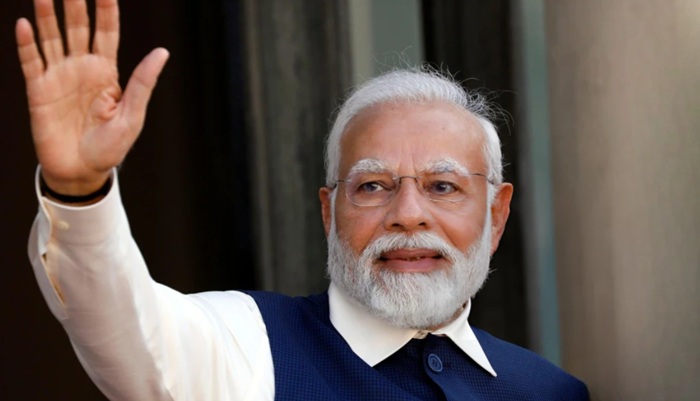
Prime Minister Narendra Modi’s recent visit to Jordan, Ethiopia, and Oman reflects India’s integrated strategic approach to the Middle East, Africa, and the Indian Ocean. Rather than treating these regions in isolation, New Delhi is responding to their geopolitical interconnection, especially in the wake of disruptions to global trade routes.
The visit to Jordan, marking seventy-five years of diplomatic relations, is significant because it comes after a long gap and amid instability following the Gaza war. Conflict in Yemen and Sudan has destabilized the broader region, including the Red Sea littoral states.
Indian External Affairs Minister S. Jaishankar has described the Middle East as a “crucial passage” linking Africa, Europe, the Mediterranean, and the Indo-Pacific, underscoring India’s view of the region as a connector rather than a standalone theater. Modi’s decision to visit Jordan, Ethiopia, and Oman together reflects this. Each country occupies a critical location: Jordan sits at the crossroads of the Middle East, between Israel and the Persian Gulf; Ethiopia dominates the Horn of Africa and is Africa’s second-most populous country; and Oman abuts the Strait of Hormuz and the western Indian Ocean.
Jordan holds importance for India as a moderate and stabilizing actor in a volatile region. Its rejection of extremism and its balanced diplomacy allow India to engage the Middle East without becoming entangled in intra-regional rivalries. Modi’s warm reception in Amman and his talks with King Abdullah II underscore the partnership. Modi said his visit had been “immensely productive” and had “strengthened the India-Jordan partnership across key areas such as renewable energy, water management, digital transformation, cultural exchanges, and heritage cooperation.” Both sides, he said, “strongly reaffirmed their shared stand against terrorism.”
The two sides signed multiple memorandums of understanding addressing renewable energy, water resources, and digital transformation. At the economic level, Modi called for doubling India-Jordan bilateral trade to $5 billion over the next five years, signaling New Delhi’s intent to move beyond symbolism toward tangible economic outcomes. Jordan’s intent to join India-led initiatives such as the International Solar Alliance, the Global Biofuel Alliance, and the Coalition for Disaster Resilient Infrastructure highlights India’s growing institutional influence. For New Delhi, engaging Jordan sends the message that Middle Eastern stability is central to India’s energy security, diaspora protection, and regional strategy.
Ethiopia represents India’s gateway to Africa. Over $200 billion of Indian trade passes through the Red Sea annually, making regional instability—piracy, trafficking, and recent attacks on shipping—a direct concern for India. During his address to the parliament, Modi underscored the strategic rationale behind his visit, stating that “Ethiopia sits at a crossroads of Africa. India stands at the heart of the Indian Ocean. We are natural partners in regional peace, security and connectivity.” As host to the African Union, Addis Ababa is also a diplomatic hub for India’s Africa policy. Modi emphasized solidarity among developing nations, observing that “when spider webs unite, they can tie up a lion.”
During the visit, India and Ethiopia elevated their bilateral ties to a Strategic Partnership. Modi’s outreach reinforces India’s aspiration to consolidate its leadership of the Global South through development partnerships that prioritize transparency and capacity-building, rather than China-style debt dependency to which Ethiopia previously fell victim.
Oman, meanwhile, remains one of India’s most trusted partners in the Persian Gulf. It is vital for India’s energy and maritime security. Indo-Oman defense and naval cooperation is extensive, with Indian naval access to ports including Duqm, enhancing India’s reach in the western Indian Ocean.
Oman also plays a key role in India’s Link West policy, MAHASAGAR vision, and extended neighborhood strategy. During the visit, Modi emphasized the need to strengthen India’s strategic partnership with Oman, including cooperation on trade, investment, and regional stability. Both sides signed a free-trade agreement, and diaspora connections, maritime links, and economic ties continue to reinforce the partnership.
The visit also carries a geo-economic dimension. As India’s global interests expand—and as trade uncertainties grow amid renewed tariff pressures from the United States—New Delhi is diversifying its economic and strategic partnerships. The Middle East and Africa are central to this effort. U.S. policymakers should expect greater Indian involvement in the Middle East and the Fifth Fleet area of operations. (Middle East Forum)