

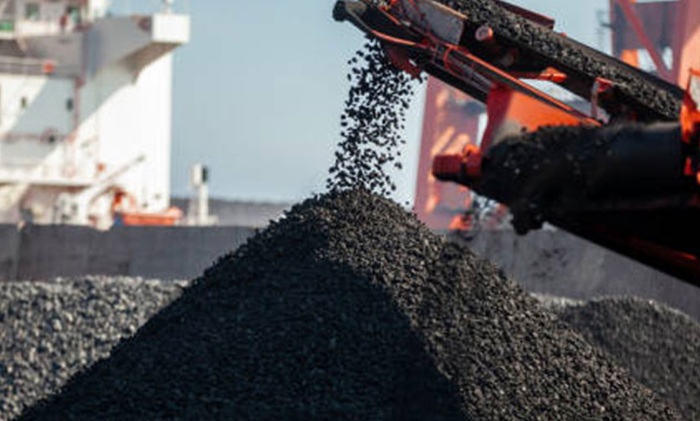
The Centre for Environmental Justice (CEJ) has raised concerns that recent coal consignments suspected to be of inferior quality may contain elevated mercury levels, posing risks to ecosystems and human health.
According to The Island newspaper, Chairperson of CEJ, environmental scientist Hemantha Withanage, environmentalists have cautioned that Sri Lanka still lacks binding standards on mercury content in imported coal, leaving communities near the Norochcholai coal power plant vulnerable to contamination.
“International studies show that mercury content in coal can vary significantly. For example, research on South African coal indicates a range between 0.01 and 0.49 ppm. However, Sri Lanka has still not established a maximum permissible mercury level for imported coal,” Withanage noted.
He explained that while the environmental protection licence for the Norochcholai plant allows mercury emissions of up to 0.01 mg/Nm³, regulating emissions alone is inadequate without controlling mercury levels at the source.
The CEJ believes mercury released during coal combustion at Norochcholai may enter the marine environment, eventually accumulating in fish consumed by local communities.
“A 2018 CEJ study conducted in the Kalpitiya peninsula, near Puttalam, found alarming levels of mercury exposure among women of childbearing age. According to the study, 28 out of 36 women, approximately 77%, had mercury levels in hair samples exceeding the internationally accepted safety threshold of 1 ppm. The most disturbing finding was a recorded level of 15.584 ppm in one individual. These women were regular consumers of fish from the Puttalam lagoon, suggesting a bioaccumulation pathway,” Withanage explained.
He warned that mercury, a potent neurotoxin, can transform into methylmercury and enter the food chain, disproportionately affecting coastal and fishing populations.
Environmentalists are now urging urgent action, including the introduction of national standards for mercury content in imported coal, mandatory independent testing of all coal consignments, and comprehensive health assessments of communities living near the power plant. (Newswire)