
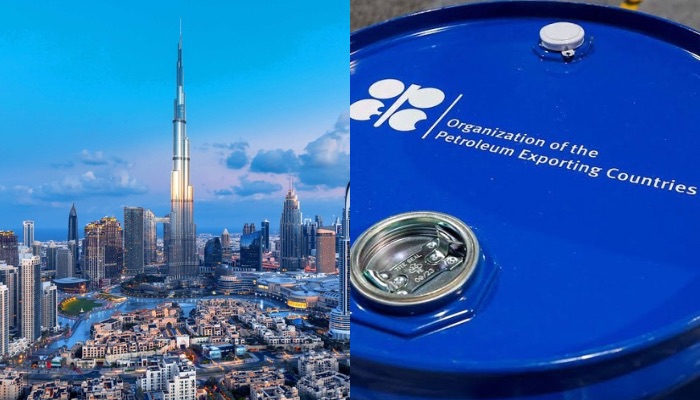
The United Arab Emirates announced on Tuesday (28) that it is leaving OPEC and OPEC+, in a move that could reshape global oil dynamics and weaken the cohesion of the producers’ alliance.
UAE Energy Minister Suhail Mohamed al-Mazrouei has told Reuters that the decision followed a review of the regional power’s energy strategies.
Asked whether the UAE consulted other countries, including Saudi Arabia, before making the decision, he said,
“This is a policy decision, it has been done after a careful look at current and future policies related to level of production.”
The UAE has long been a key member of OPEC, and its exit is seen as a significant setback for the group, which has often sought to maintain unity despite internal disagreements over production quotas and geopolitical issues.
The decision comes amid heightened tensions in the region, including disruptions to oil shipments through the Strait of Hormuz, a key global energy route affected by the ongoing Iran conflict.
Mazrouei said the UAE’s departure is unlikely to have a major immediate impact on oil markets due to existing supply disruptions.
The move has also drawn attention in Washington, with U.S. President Donald Trump having previously criticised OPEC, saying the group was “ripping off the rest of the world” by inflating oil prices. (Newswire)