
Sri Lanka has introduced a Bill to amend the Value Added Tax (VAT) Act, proposing wide-ranging changes that will impact businesses, digital services, and tax compliance across the country.
According to a tax update issued by KPMG in Sri Lanka, the amendment Bill was released on April 29, 2026, and will become legally enforceable following the completion of the constitutional process in Parliament.
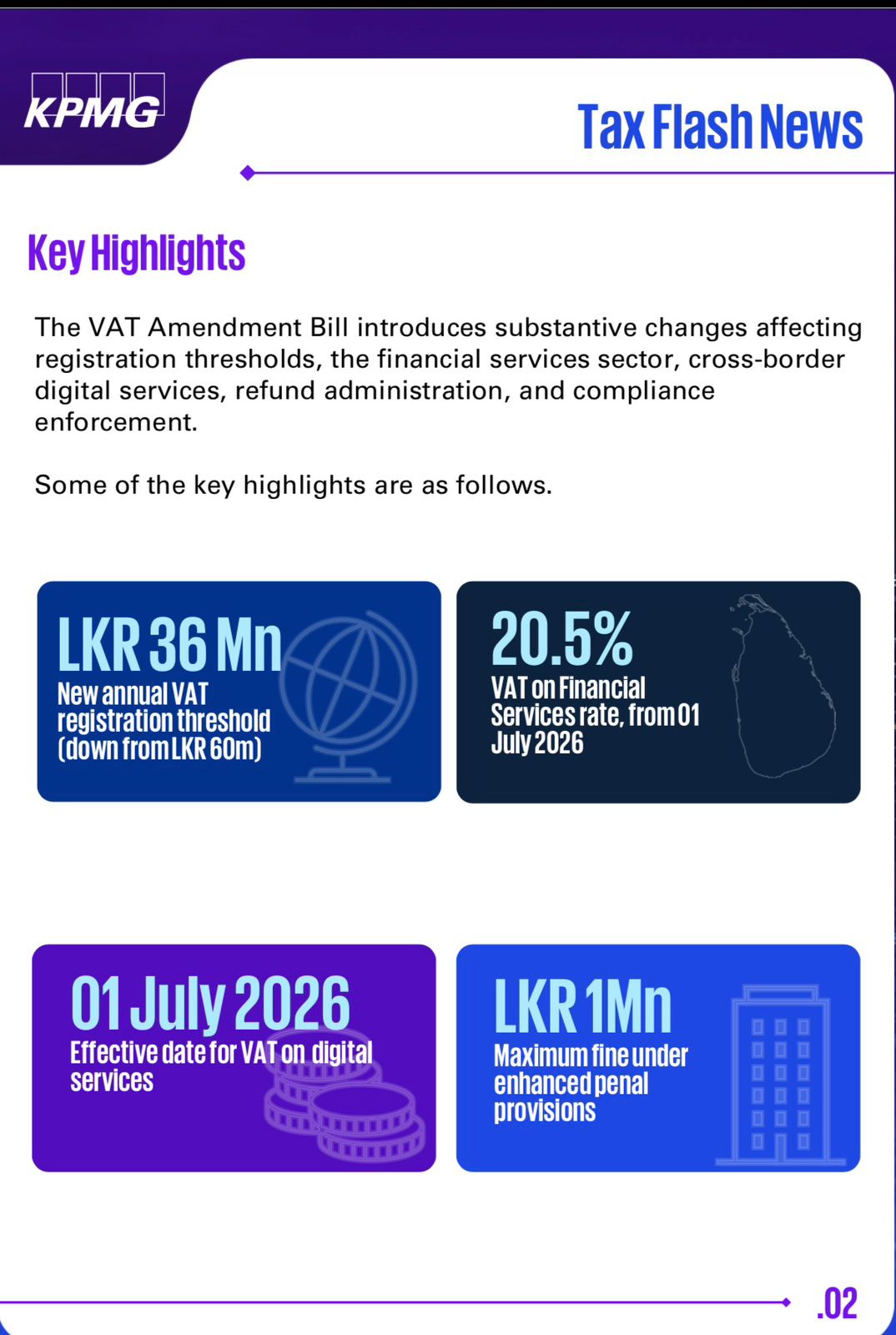
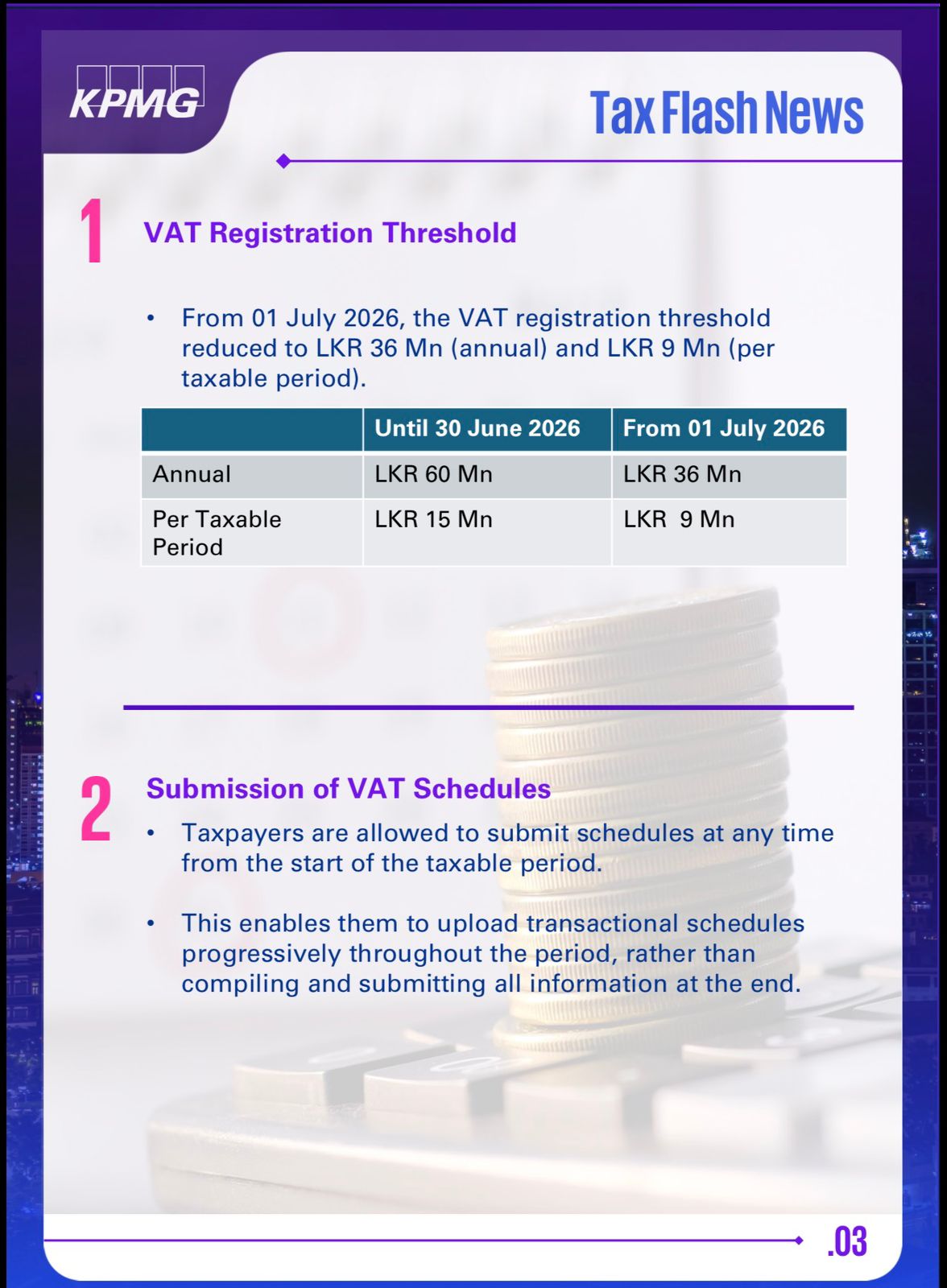
Key changes proposed in the Bill include a reduction in the VAT registration threshold from Rs. 60 million to Rs. 36 million annually, bringing more businesses into the tax net from July 1, 2026.
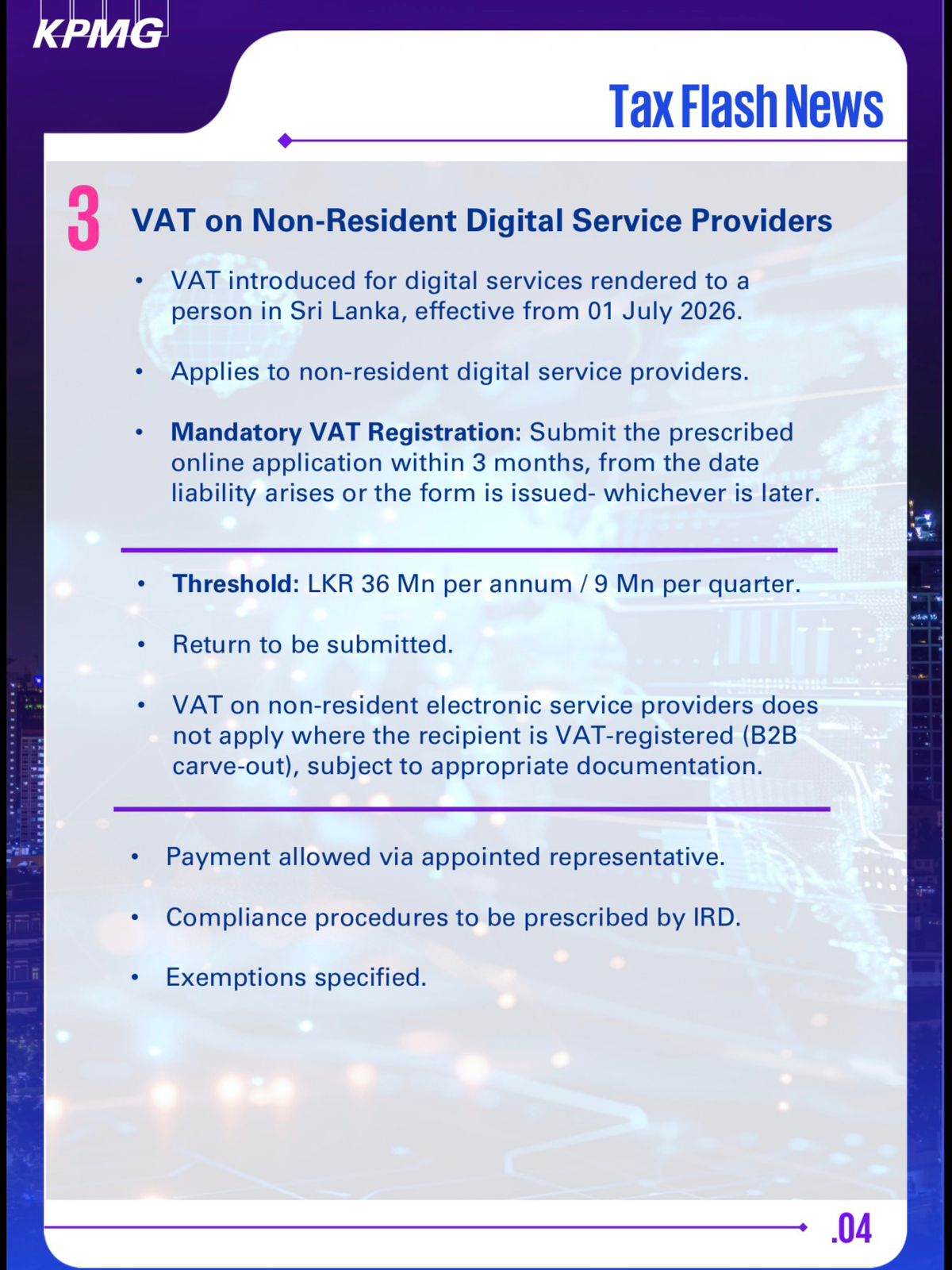
The Bill also introduces VAT on digital services provided by non-resident companies to consumers in Sri Lanka, marking a significant shift in how cross-border online services are taxed. This measure is set to take effect from July 1, 2026.
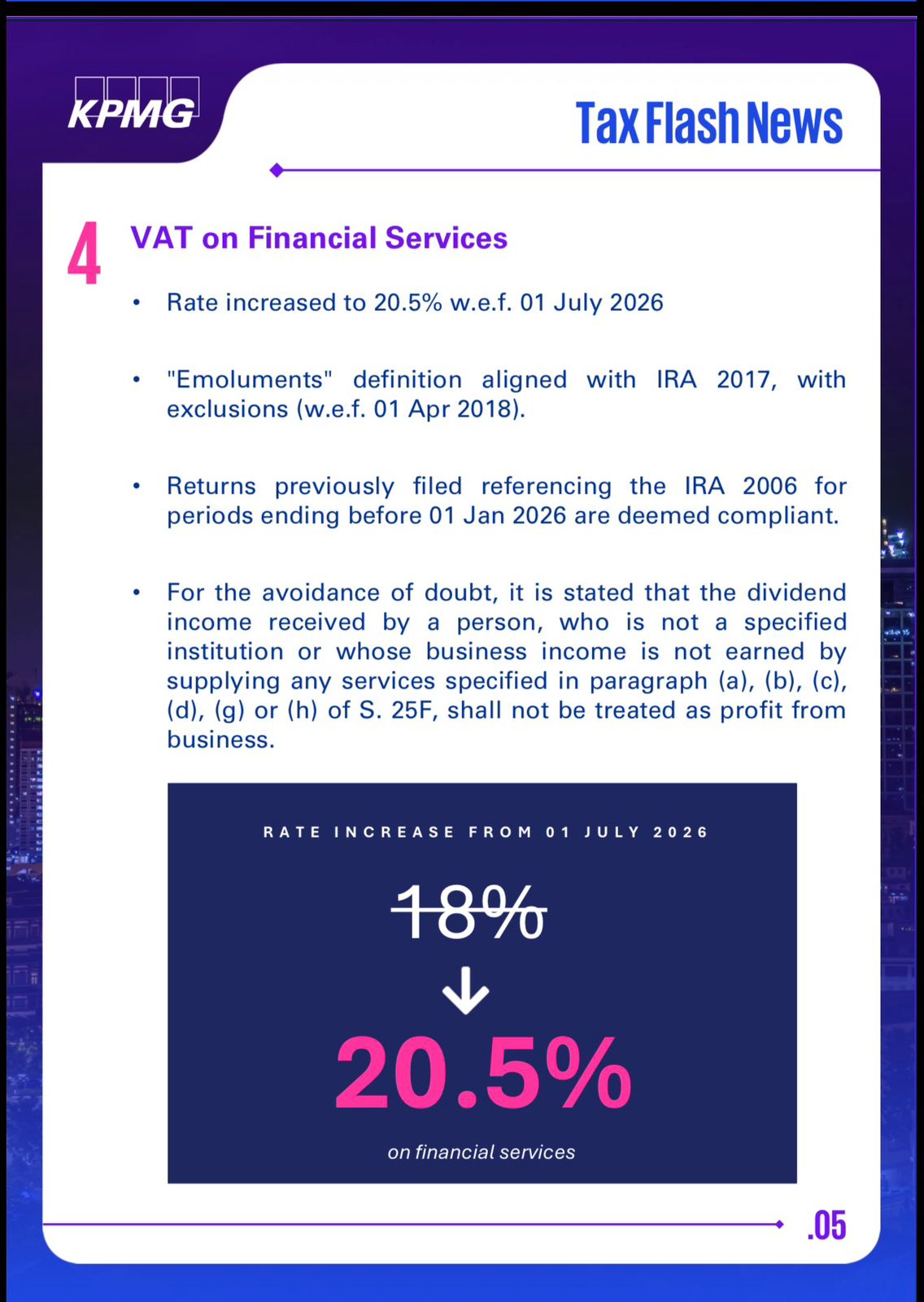
In the financial sector, VAT on financial services will increase from 18% to 20.5% from the same date, further impacting banks and related institutions.
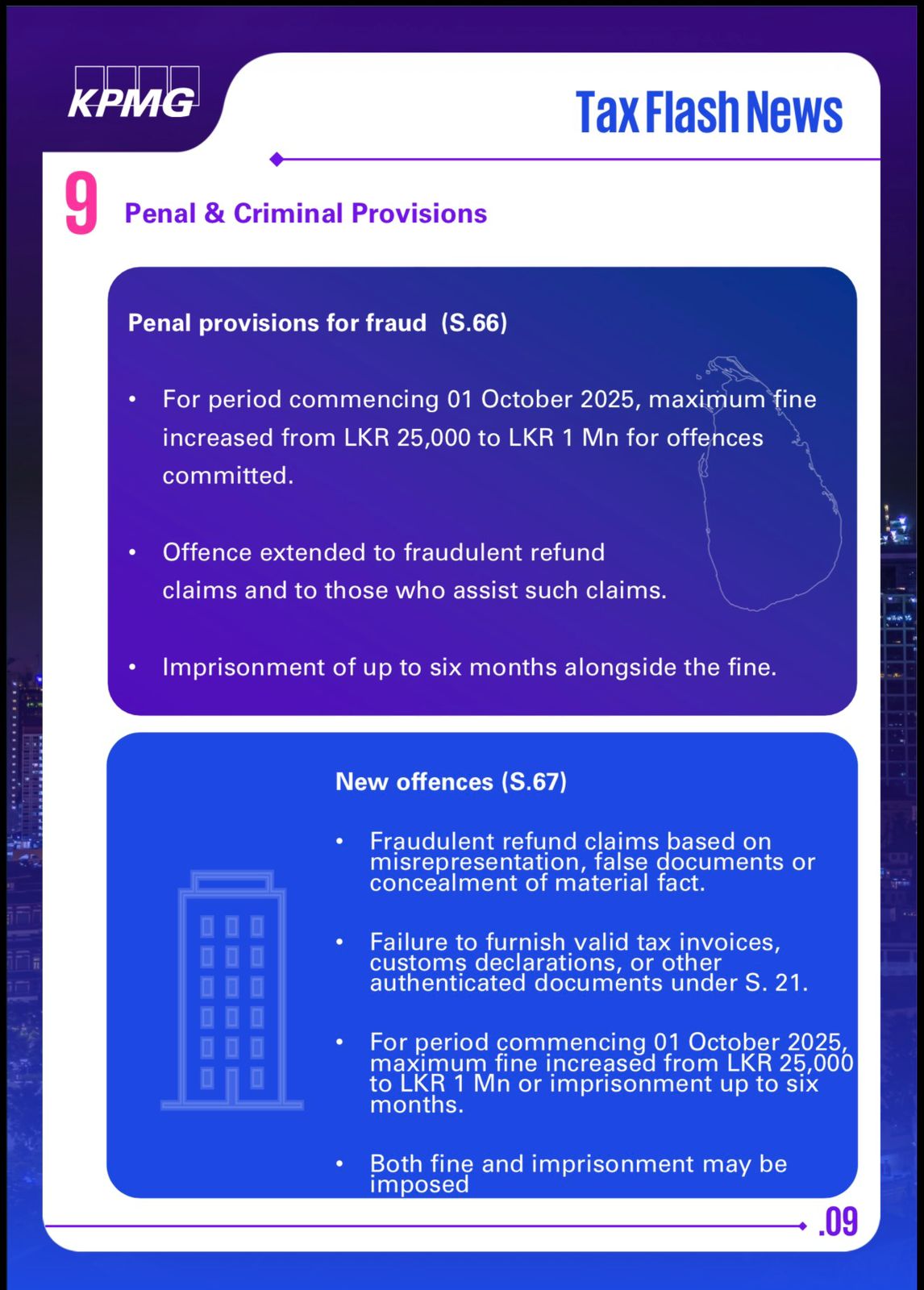
Stronger enforcement measures have also been proposed, including increasing the maximum fine for tax-related offences to Rs. 1 million, along with the possibility of imprisonment of up to six months.
Additionally, all VAT-registered businesses will be required to adopt secured point-of-sale (POS) systems approved by the Inland Revenue Department to improve real-time transaction reporting and compliance.
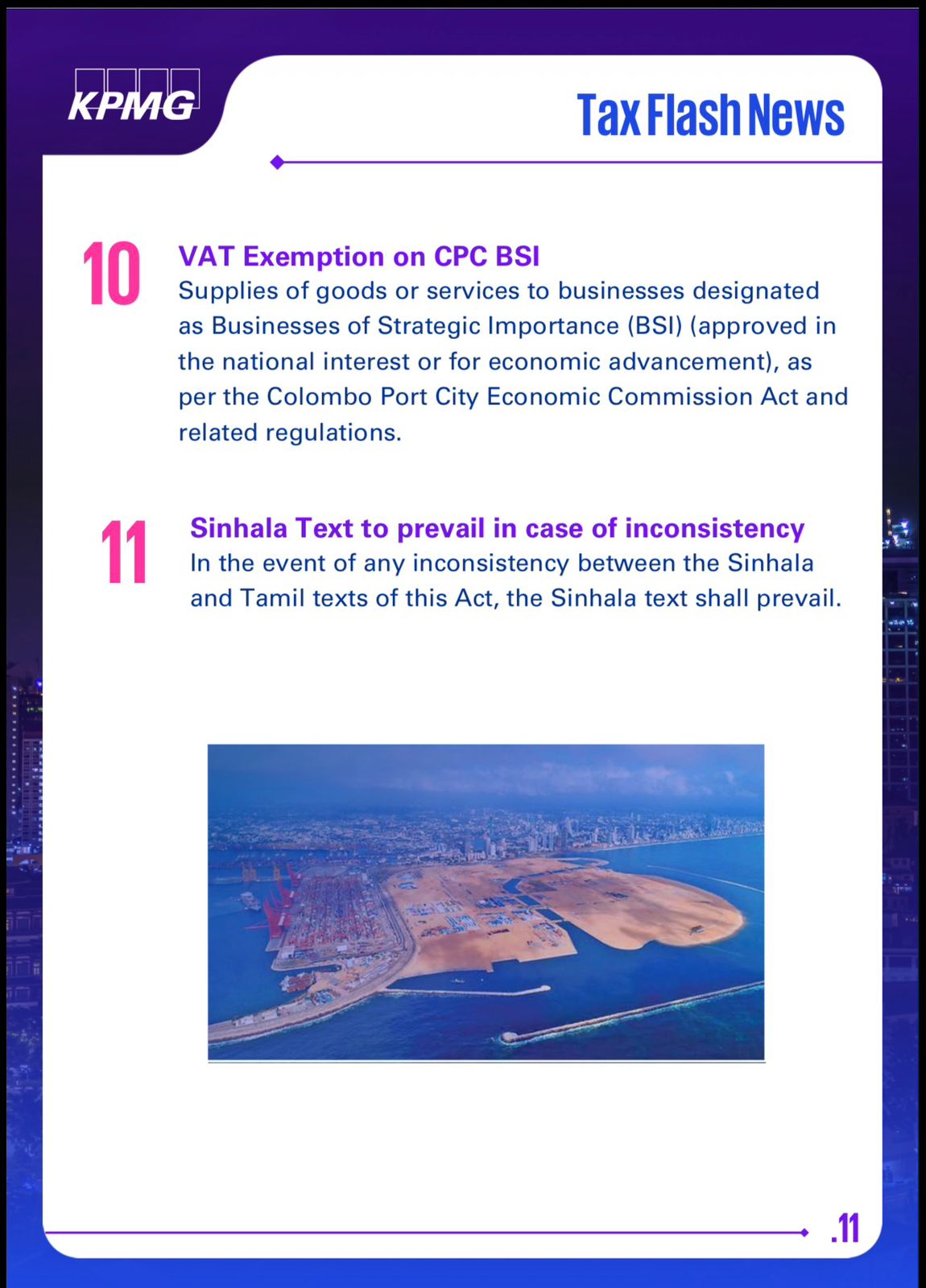
The proposed amendments also include provisions for public disclosure of registered taxpayers, revised input tax rules, and specific exemptions for strategic businesses operating under the Colombo Port City framework. (Newswire)