

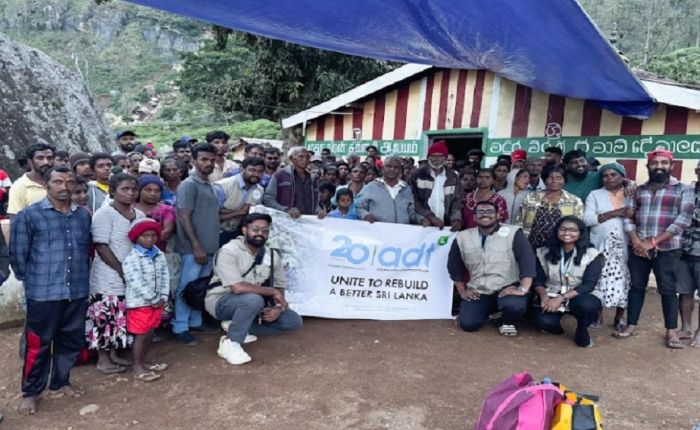
In the aftermath of devastating floods that displaced entire communities across the country, the Alliance Development Trust (ADT) has emerged as a key actor in relief, recovery, and long-term rebuilding efforts, reaching thousands of affected families across multiple districts.
As floods and landslides struck vulnerable regions, families were left struggling for shelter, food, and basic necessities. Responding rapidly, ADT implemented emergency relief measures across districts including Colombo, Gampaha, Kandy, Vavuniya, and Wattala, as well as in the upcountry and eastern regions. Through these interventions, more than 8,000 individuals from over 2,000 households received critical assistance.
Emergency support included the distribution of cooked meals to families in temporary shelters, while dry ration packs were provided to those living outside camps. Hygiene items were also distributed to maintain sanitation and prevent disease outbreaks, alongside disinfection initiatives aimed at creating safer living conditions. As conditions gradually stabilized, ADT expanded its operations into recovery-focused programs, particularly in the Nuwara Eliya and Trincomalee districts.
Schools and preschools were cleaned and restored, enabling children to safely resume their education. Hundreds of households were supported with essential items such as cooking utensils, helping families rebuild their daily lives.
Additional interventions included educational support for children, as well as nutritional programs and health camps designed to address immediate health and dietary needs within affected communities. Among ADT’s recent initiatives, a significant step has been the commencement of a cash assistance program targeting 480 of the most severely affected families in the upcountry and eastern regions. This initiative empowers families to prioritize their own needs, reflecting a humanitarian approach that emphasizes dignity, choice, and resilience.
Beyond immediate recovery, ADT has also focused on long-term development initiatives. Livelihood restoration programs, combined with skills training, are helping families rebuild income sources disrupted by the floods while promoting sustainable economic practices.
Efforts to improve sanitation infrastructure have also been undertaken, including the construction of latrines in vulnerable communities to support healthier living environments. In parallel, ADT has strengthened community capacity through climate resilience awareness programs and disaster risk management training. These initiatives aim to equip communities with the knowledge and practical skills needed to better prepare for and respond to future emergencies.
Supporting these extensive efforts is a network of dedicated volunteers, staff, and community partners working across districts. Their commitment has transformed emergency response into a sustained pathway toward recovery and resilience for thousands of affected families.
ADT, a registered NGO, works in the areas of emergency response, sustainable livelihoods, health initiatives, child participation and development, peacebuilding, reconciliation, and community empowerment.