

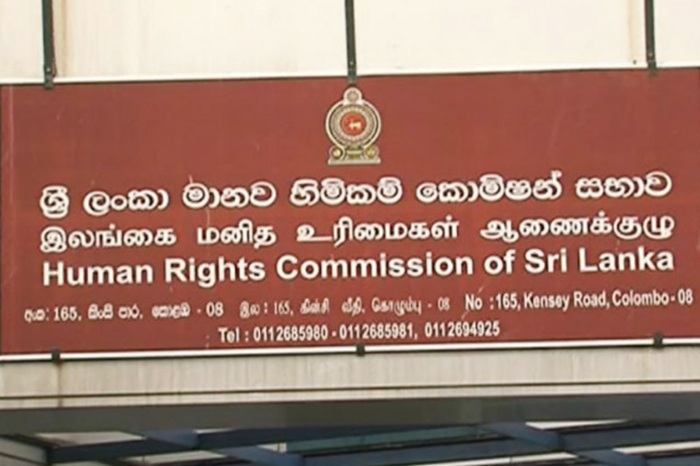
Sri Lanka’s Human Rights Commission (HRCSL) recently (18) launched the country’s first national Guidelines and Recommendations on Business and Human Rights, aimed at promoting responsible business conduct and embedding human rights principles into corporate policies and practices.
Issuing a statement, the HRCSL said the initiative was developed by the HRCSL’s Thematic Sub‑Committee on Business and Human Rights, with the initial concept paper prepared by its Research and Monitoring Division.
Anchored in the United Nations Guiding Principles on Business and Human Rights, the guidelines provide a practical framework for businesses to respect human rights and prevent, mitigate, and address adverse impacts arising from business activities.
Technical assistance came under the EU‑funded project Just Business: Promoting the Adoption of Business and Human Rights in Sri Lanka and the Maldives, implemented by the Max Planck Foundation for International Peace and the Rule of Law and the Centre for a Smart Future.
Following extensive consultations with stakeholders, including the private sector, the guidelines were reviewed by HRCSL’s Business and Human Rights Sub‑Committee and the Economic, Social and Cultural Rights Sub‑Committee before publication.
At the launch, HRCSL Chairperson Justice L.T.B. Dehideniya emphasized that the guidelines “are not meant to hinder investment or economic growth but to support a responsible, sustainable business environment attractive to investors who value strong environmental, social and governance standards.”
Commissioner Dr. Gehan Gunatilleke added that regulators and state actors should also use the guidelines as a reference in policymaking and litigation.
Representing the private sector, Rathika de Silva, Executive Director of UN Global Compact Network Sri Lanka, said the initiative was a strategic move: “For Sri Lanka, this is not just an opportunity, but a necessity… to show that ‘made in Sri Lanka’ means not just quality, but quality and human rights.”
As global expectations for responsible business evolve, the guidelines are expected to serve as a reference point for companies, state‑owned enterprises, regulators, and civil society, supporting inclusive and sustainable economic growth that respects human rights. (Newswire)