

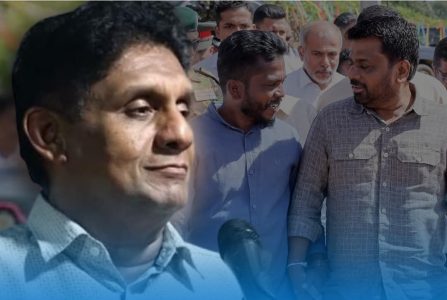
Opposition Leader Sajith Premadasa has warned that those introducing extraordinary powers under the proposed Prevention of Organised Crimes Bill could one day become victims of the very laws they create, calling for the immediate withdrawal of the legislation.
“Governments change. Power changes hands. The people who believe they are untouchable today may one day find themselves at the mercy of the very powers they created,” Premadasa said in a statement.
He warned that governments do not remain in power forever and that laws granting extensive powers to the State could eventually be used against those responsible for introducing them.
“Such arrogance has always been punished. If not by the laws of the land, then by the laws of karma,” he said.
Premadasa drew comparisons with the Prevention of Terrorism Act (PTA), introduced in 1979 as a temporary measure, saying Sri Lanka was still struggling to address the consequences of the extraordinary powers it granted the State.
He raised concerns over several provisions in the proposed Prevention of Organised Crimes Bill, including detention for up to one year under executive orders, the admissibility of confessions made to police and access to telephone records and location data without prior judicial approval.
He also warned that a person’s associations, clothing, language and tattoos could become grounds for suspicion.
According to Premadasa, such provisions could potentially affect students participating in protests, journalists investigating corruption and trade unionists organising workers.
He also referred to concerns raised by United Nations human rights experts over the potential misuse of the proposed legislation, particularly against journalists, human rights defenders, trade unions and peaceful protesters.
While acknowledging the need to combat organised crime, Premadasa questioned whether such efforts should come at the expense of citizens’ fundamental freedoms.
“Nobody disputes that organised crime must be defeated. But why should the price of fighting criminals be the freedom of ordinary citizens?” he asked.
“A government is temporary. The freedoms of a nation must not be,” Premadasa said, reiterating his call for the Bill to be withdrawn. (Newswire)