

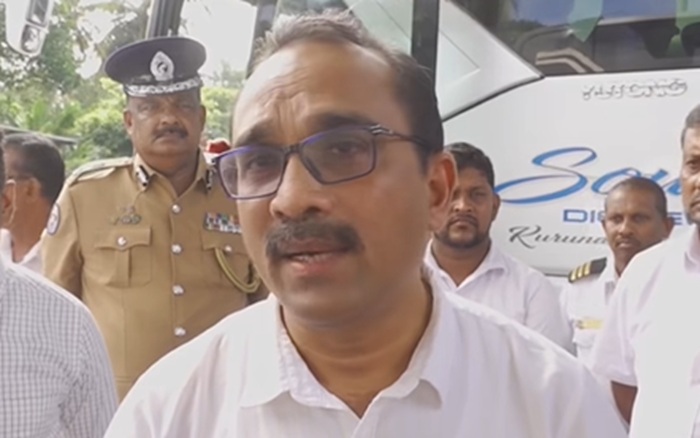
Transport Minister Bimal Ratnayake has warned that vehicle owners cannot disregard road safety regulations by claiming their vehicles and fuel are their private property, stressing that all motorists must comply with the law when using public roads.
Speaking at an event, the minister said individuals were free to make their own decisions about their vehicles within their private premises, but such freedom did not extend to public roads, where the safety of others must be protected.
“You can say ‘my car, my petrol’ within your own compound, but you cannot bring that attitude onto public roads. The law applies to everyone,” Ratnayake said.
He explained that road accidents have consequences beyond those directly involved, requiring medical personnel, police officers and other public officials to respond.
The minister also highlighted the importance of studying road accidents to identify their underlying causes rather than treating them as isolated incidents.
He said he had personally studied accident reports, spoken to police officers and medical professionals, and examined findings from motor vehicle examiners to better understand the factors contributing to fatal crashes.
According to Ratnayake, investigations into several major bus accidents that claimed numerous lives revealed serious mechanical defects in the vehicles involved.
He said these findings had prompted the government to introduce additional roadworthiness requirements for passenger transport vehicles.
Under the new requirements outlined by the minister, passenger transport vehicles travelling more than 5,000 kilometers, including those used for trips and pilgrimages, must undergo periodic roadworthiness inspections and obtain certification.
Ratnayake said the inspections would be required every 3 months to ensure that vehicles remained mechanically fit for passenger transportation.
He also outlined plans to involve properly registered and accredited garages in the certification process, creating opportunities for qualified technicians while strengthening vehicle safety standards.
The minister said police officers would be able to inspect the certificates and take legal action against operators who failed to comply with the requirements.
He further revealed that the Cabinet had approved new specifications for buses imported into Sri Lanka following extensive discussions and technical assessments.
According to Ratnayake, many buses currently operating in the country do not meet the safety standards expected of purpose-built passenger transport vehicles.
He said the new specifications would ensure that only buses meeting the approved passenger safety requirements could be imported in the future.
Vehicles designed primarily for transporting goods would no longer be permitted to enter the country for use as passenger buses under the proposed standards, he added.
Ratnayake urged relevant authorities and organizations to examine road accidents carefully and use the findings to introduce practical safety improvements, noting that even relatively inexpensive changes could help prevent future tragedies. (Newswire)