

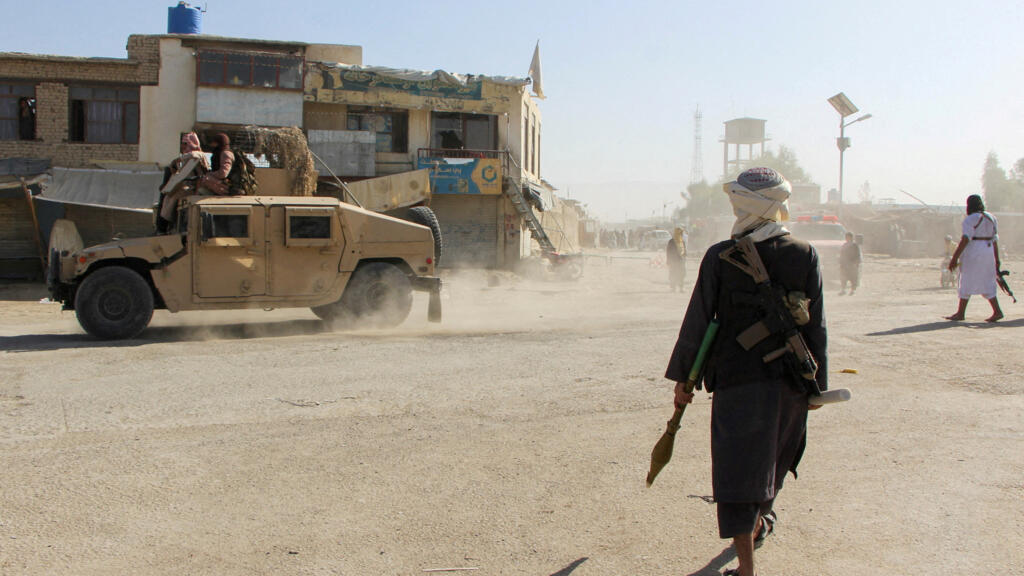
While international attention is focused on the war between Iran, Israel, and the United States, an “open war” is escalating between nearby Afghanistan and Pakistan, which could have a strategic ripple effect throughout the region.
Taliban rulers in Afghanistan on Tuesday accused Pakistan of carrying out an airstrike that killed at least 400 people at a drug treatment hospital in Kabul late Monday. Afghan officials said the strike hit the 2,000-bed rehabilitation facility at around 9 p.m. local time (1630 GMT), causing extensive damage and leaving hundreds wounded, in a major escalation of the weekslong cross-border fighting between the neighbors.
Islamabad denied targeting civilian infrastructure, saying its armed forces carried out “precision airstrikes” that aimed at “military installations and terrorist support infrastructure” in Kabul and eastern Nangarhar province. That is according to Attaullah Tarar, the country’s information minister.
Both Islamabad and the Taliban government in Kabul have traded blame for sparking the latest iteration of the ongoing conflict. Pakistan says it is responding to attacks from the Tehreek-e-Taliban Pakistan (TTP), which are said to be operating from Afghan territory. The Taliban government rejects these accusations.
Within a few days, however, Pakistani airstrikes were no longer directed exclusively at suspected TTP targets, but also at Afghan military sites.
On March 1, the former US Air Force base in Bagram was also attacked. According to reports and an analysis of satellite imagery, a hangar and two warehouses were destroyed. The Taliban, however, claimed that the attack had been repelled and that the base had sustained no damage.
The symbolism of Bagram
The fact that Bagram, of all places, has come under fire shifts the dimensions of the conflict. Until 2021, Bagram served as the operating center for the US military presence in Afghanistan. US President Donald Trump has more than once said that the US should “never have given up” Bagram, citing its strategic importance with a proximity to China.
According to media reports, Washington had explored the possibility whether the base could be used again. The Taliban have categorically rejected any return of US forces.
The timing of Pakistan’s attack on Bagram on the second day of coordinated US-Israeli attacks on Iran also highlights how multiple regional conflicts are unfolding simultaneously, even if there are no direct connection between them.
Pakistan and the Taliban: A complicated history
The Taliban have traditionally maintained close ties with Pakistan. During their first period in power in Afghanistan from 1996 to 2001, Pakistan was one of only three countries to recognize the regime in Kabul diplomatically.
Observers and former government officials have repeatedly pointed to financial, logistical, and security support from parts of the Pakistani military and intelligence apparatus.
After the Taliban took over Afghanistan again in 2021, relations with Islamabad were initially considered close. High-ranking representatives of the Pakistani security establishment traveled regularly to Kabul and Kandahar. Pakistan worked on the international stage to prevent Afghanistan from being completely isolated under Taliban rule.
In recent months, however, tensions have escalated significantly. Islamabad accuses the Taliban of failing to take decisive action against the TTP. The Taliban deny actively supporting Pakistani insurgents but also oppose large-scale military operations against the TTP. What was once a close strategic partnership has turned into a tense relationship.
The TTP’s threat to Pakistan
Against this backdrop, Huma Baqai, an expert on international relations in Pakistan, told DW the Pakistani strikes on the Taliban in Afghanistan were necessary from a security policy perspective as Pakistan is facing an “existential threat.” The rise in TTP attacks has forced Islamabad to take more decisive military action.
Although there is no direct military support from the US, “Pakistan definitely has Washington’s approval to continue its operations,” she said.
Baqai also pointed to the geopolitical significance of Bagram. If Washington were to reestablish a military presence there, it would find itself “in the backyard of Pakistan, Iran, Russia, and China.”
The fact that Iran’s de-facto ambassador to Afghanistan recently publicly thanked the Taliban for their decision to not allow the US to use the base is an indication of just how delicate the regional balance has become.
Iran’s acting head of the Iranian embassy in Kabul, Alireza Bikdeli, stated in an interview with the Afghan broadcaster ShamshadTV on March 12 that the Taliban’s decision may have prevented Afghanistan from being drawn into a direct conflict with Iran, as a US presence there would have had major security implications for Tehran.
Like the rest of the world except for Russia, Iran does not officially recognize the Taliban as the government of Afghanistan.
Bikdeli in another interview last month however already said that officially recognizing the Taliban was on the table and it would happen very soon. (DW)