


The company plans 300MW of solar and 110MW of wind power projects as it seeks to become the country’s largest renewable energy developer.
Sri Lanka’s renewable energy sector is entering a new phase of expansion, with private-sector investment expected to play an increasingly important role in meeting the country’s future electricity demand.
Hayleys Fentons is positioning itself to play a major role in this transition, with plans to develop approximately 410 megawatts (MW) of renewable energy capacity over the next few years, comprising 300MW of solar power and 110MW of wind power.
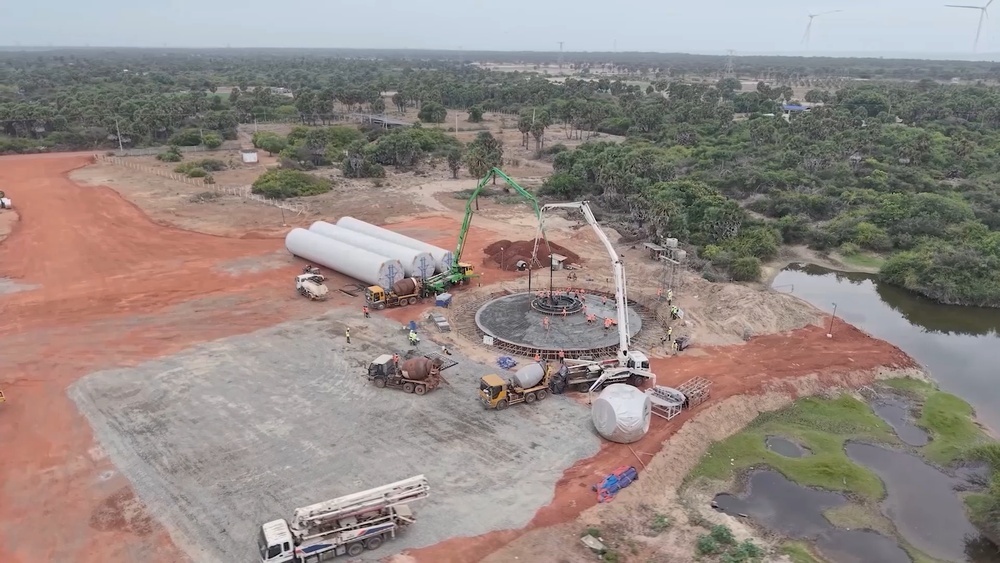
The company’s growing involvement in wind energy, alongside its established solar business, reflects its broader ambition to strengthen Sri Lanka’s renewable energy capacity while developing local engineering expertise.
In this interview, senior representatives of Hayleys Fentons and Haywind One discuss the company’s energy strategy, its 50MW Mannar wind farm, investment opportunities, community development initiatives and the future of renewable energy in Sri Lanka.
Interview
Interviewer: Hayleys operates across several business verticals. Where does the energy business fit into the company’s overall vision, and what makes it such an important area of focus today?
Mr. Prematilake: Let me first give you some background on Hayleys. Hayleys is the parent company of Hayleys Fentons and has a history spanning 148 years. It is also Sri Lanka’s largest conglomerate.
Hayleys Fentons is one of the 17 business verticals within the Hayleys Group. Within Hayleys Fentons, we operate across three main pillars: Energy, Mobility and Projects.
Projects is our oldest business vertical, with a history of 107 years. It focuses on electromechanical projects, system-integrated solutions and construction-related activities.
Our energy pillar started in 2013 with the solar business. We developed Hayleys Solar into a market leader and one of the most recognised brands in the industry.
However, solar is not the only renewable energy source in Sri Lanka. While hydro has become almost saturated and solar is reaching a certain level of maturity, wind remains an important and relatively untapped energy resource.
That is why we entered the wind energy sector with a 50MW project in Mannar, which is considered one of the best wind resource locations in Sri Lanka. The area offers a plant factor of around 45% to 50%, representing a very strong energy yield.
At the time, the prevailing tariff for large wind projects was approximately US cents 8.22 per unit. However, through competitive bidding, we managed to secure a rate of US cents 4.65 per unit, equivalent to approximately Rs. 15.
This was one of the lowest tariffs achieved for a wind project in Sri Lanka. We believe this helped set a new benchmark for the renewable energy industry, and other developers are now following a similar trend.
Interviewer: Sri Lanka has set ambitious renewable energy targets, including achieving carbon neutrality by 2050. How does Hayleys Fentons see its role in helping the country achieve these goals?
Mr. Perera: We expect electricity demand in the country to grow, particularly with the increasing adoption of electric mobility.
We believe this additional energy requirement can be met through renewable energy, allowing us to provide consumers with more affordable, low-cost electricity.
As mentioned earlier, wind and solar are the two main areas with significant potential. When combined with battery energy storage systems, these technologies will drive the renewable energy market.
Our contribution comes through two main areas. The first is our Engineering, Procurement and Construction (EPC) business. We are the largest solar EPC contractor in the country, and through the experience we are gaining from the Haywind One project, we hope to develop similar capabilities in wind energy projects.
The second area is investment and project development. We are planning to develop approximately 300MW of solar power over the next few years, along with around 110MW of wind power.
With these projects and future opportunities, we hope to become the largest renewable energy developer in the country.
At present, our energy sector employs approximately 700 people, including more than 350 engineers. We are building local technical expertise and capabilities so that Sri Lanka will not have to depend heavily on foreign knowledge and expertise in the future.

Interviewer: Haywind One Limited is currently developing the 50MW Mannar Wind Farm. Could you give us an overview of the project and explain how the company is approaching its development?
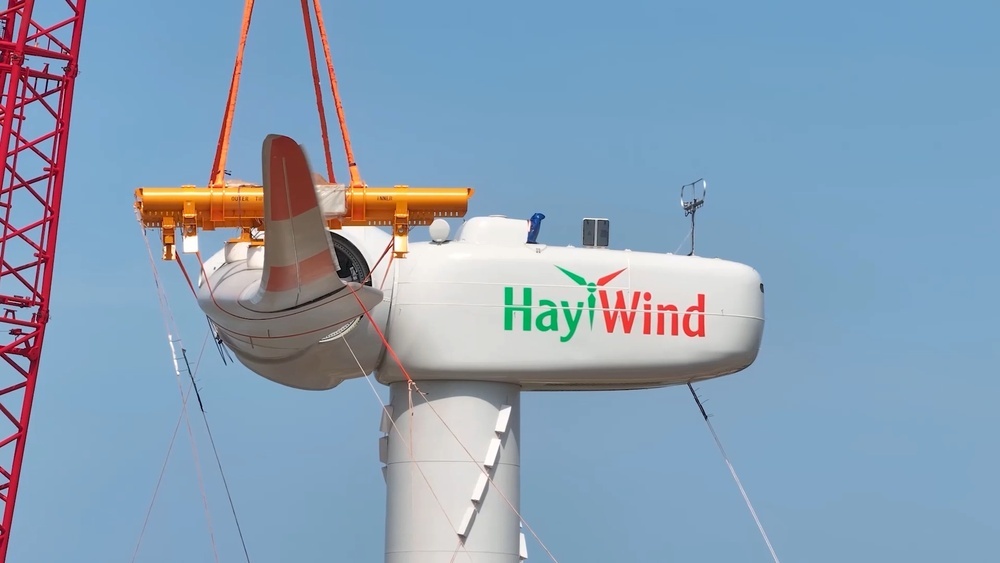
Mr. Perera: The Haywind One project is a 50MW wind farm in Mannar, consisting of 10 wind turbines, each with a capacity of 5MW.
The turbines will have tower heights of approximately 110 metres, while each blade measures 76 metres in length. These are substantial pieces of equipment, and installing them requires considerable technical expertise and planning.
One of the main benefits of this project is that it will provide low-cost electricity to the country. Energy costs remain a major concern, and our objective is always to maintain electricity generation costs at the lowest possible level.
At the same time, we are introducing the latest technologies, including a state-of-the-art bird radar system designed to help prevent birds from colliding with the wind turbines.
We also place significant importance on supporting the local community. We have contributed through water connections, road development and employment opportunities for people in the area.
Our environmental initiatives include tree planting and other community-focused programmes. We have also donated books and supported the development of smart classrooms within the Mannar community.
Our commitment will continue beyond the construction phase. Once the project becomes operational, we hope to establish a training centre within the Haywind One facility to develop technically qualified electricians from the local community.
We intend to maintain this training centre throughout the project’s operational life, which is expected to exceed 20 years.
Interviewer: Looking ahead, what opportunities do you see for Sri Lanka’s renewable energy sector over the next decade?
Mr. Perera: As a small island nation, Sri Lanka cannot look at its energy future in isolation. Globally, there is an increasing trend towards interconnecting the energy infrastructure of different countries to create stronger, more reliable and resilient energy systems.
We are hopeful that an electricity interconnection between Sri Lanka and India can materialise within the next decade. Such a development would significantly strengthen our national electricity grid.
At the regional level, we are also expanding our operations and sharing our technical expertise internationally.
With more than 350 engineers, we are taking our capabilities beyond Sri Lanka. We are already operating successfully in the Maldives and are now entering the Bangladesh market.
Overall, we believe the immediate future of renewable energy is very promising. We expect to see greater integration of renewable energy sources into electricity grids, alongside continued investment in the infrastructure needed to support this transition.
Interviewer: Mr. Amrasinghe, this is one of the largest renewable energy projects undertaken by the private sector in Sri Lanka, yet the public may not be fully aware of its scale and significance. What opportunities does this project create for Sri Lankan engineers and academics to gain knowledge and experience?
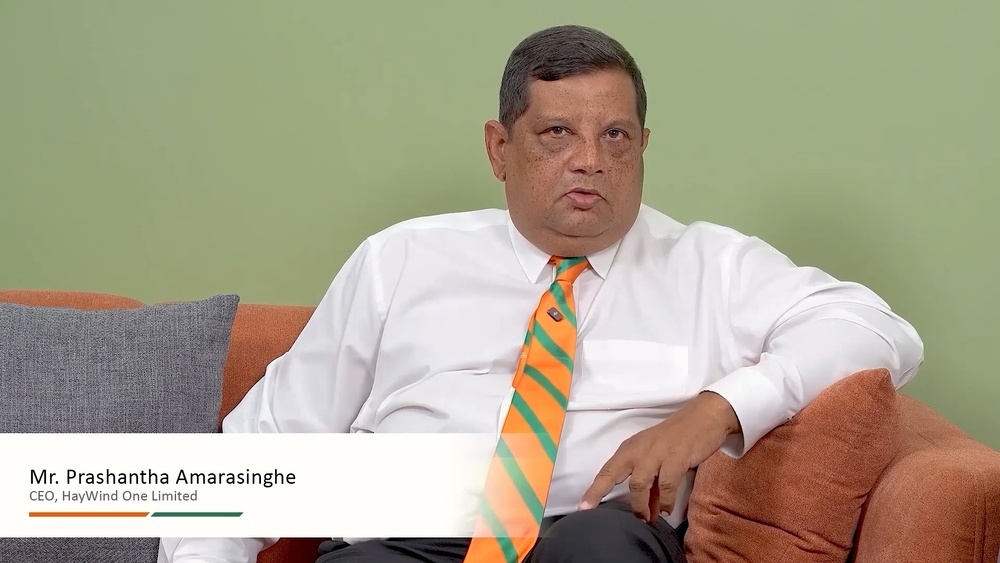
Mr. Amrasinghe: The 50MW wind farm in Mannar is our first wind energy project as a company. We have now reached an important construction milestone with the commencement of mobilisation.
Initially, we had no access roads or proper approach roads to the project site, so we had to…
Watch the full video for the complete discussion on Hayleys Fentons’ 410MW renewable energy expansion plans, the Mannar wind farm project and the future of renewable energy in Sri Lanka.