

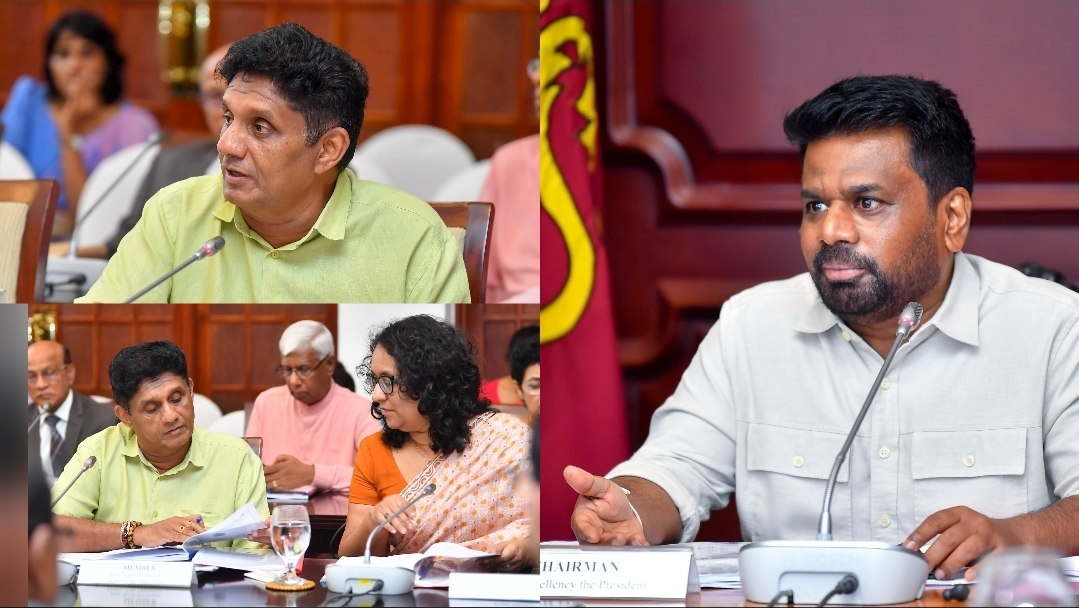
Opposition Leader Sajith Premadasa has proposed a series of measures to strengthen Sri Lanka’s climate resilience and disaster preparedness, warning that the country should act now to prepare for the anticipated impacts of the 2026-2027 El Niño cycle.
Speaking at the National Council for Disaster Management, chaired by President Anura Kumara Dissanayake, Premadasa said climate security has become a national priority that requires a united, science-based response beyond political differences.
Citing global scientific assessments, Premadasa warned that the developing El Niño could be among the strongest in recent decades, bringing prolonged droughts followed by severe flooding. He said Sri Lanka should move away from responding to disasters after they occur and instead adopt an anticipatory governance model based on scientific forecasting, risk assessments and early preparedness.
Among his key proposals was making climate resilience a whole-of-government responsibility involving institutions responsible for agriculture, water resources, energy, health, finance, defence, provincial administration and local government.
Premadasa also called for integrated reservoir management to improve water security, expansion of climate-smart agriculture to strengthen food security, and the modernisation of early warning systems through impact-based forecasting that provides communities with more actionable information before disasters strike.
He further proposed strengthening disaster risk financing, improving preparedness for heatwaves and public health emergencies, enhancing the resilience of critical infrastructure, and establishing a National Climate Risk and Disaster Intelligence Centre to support evidence-based decision-making across Government.
Premadasa said Sri Lanka should also draw lessons from countries such as India and Australia, which have strengthened climate forecasting, agricultural contingency planning and broader resilience initiatives in response to growing climate risks.
Looking beyond the immediate El Niño threat, he proposed the preparation of a Presidential White Paper on National Climate Resilience and Disaster Preparedness to establish a long-term policy framework that would guide future governments.
He stressed that climate resilience cannot be achieved by the Government alone and requires the participation of Parliament, provincial and local authorities, the scientific community, universities, the private sector, civil society, international development partners and local communities. Premadasa added that protecting the lives and livelihoods of Sri Lankans must remain a shared national responsibility. (Newswire)