

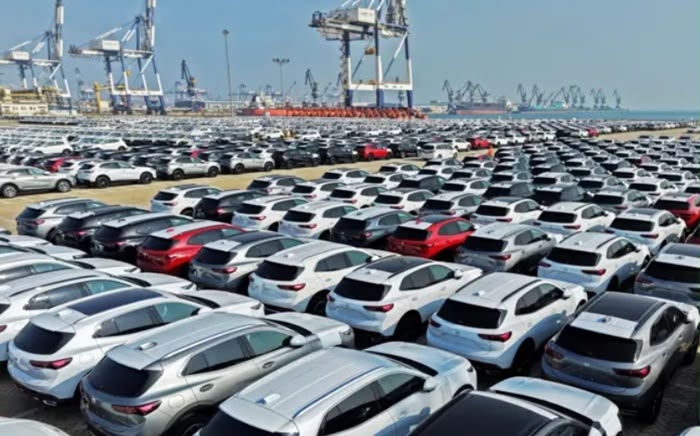
The temporary 50% surcharge imposed on selected vehicle imports should not be extended beyond its three-month period, as doing so could create uncertainty in the market, Advocata Institute Chief Executive Officer (CEO) Dhananath Fernando said.
The Government imposed the temporary surcharge with effect from May 16 under an Extraordinary Gazette issued by the Ministry of Finance, Planning and Economic Development. The measure, which applies to selected motor vehicle imports, will remain in force for three months, until 16 August, 2026.
Fernando said abrupt changes to import taxes could trigger market distortions both when imposed and when removed.
“Our view is that restricting vehicle imports through such surcharges is not a good approach because it can create significant complications in the market,” he said.
He noted that, under Sri Lanka’s agreement with the International Monetary Fund (IMF), the Government would not be able to abruptly impose another surcharge after the current measure expires.
At the same time, he said removing the surcharge at the end of the three-month period could also potential create ‘’market shock” and a sudden surge in L/C openings, which may unsettle the market.
Fernando said the decision on whether to extend the surcharge remained a policy matter for the Government, but argued there was little justification for doing so.
He also observed that registrations for vehicle imports have already declined as many consumers and dealers had already imported the vehicles they required.
“Tax revenue from vehicle imports is unlikely to be as high as last year because demand has begun to ease,” he said.
Fernando pointed out that vehicles already attract import duties ranging between 150% and 200%, adding that such high tariff levels were difficult to justify.
Rather than relying on additional taxes, he said the Government should focus on managing public expenditure and implementing broader economic reforms.
“While increasing revenue is important, managing expenditure is equally critical. Structural economic reforms are what the country needs most at this stage because they can boost revenue while also sending a positive signal that the economy is moving forward,” he said. (Newswire)