

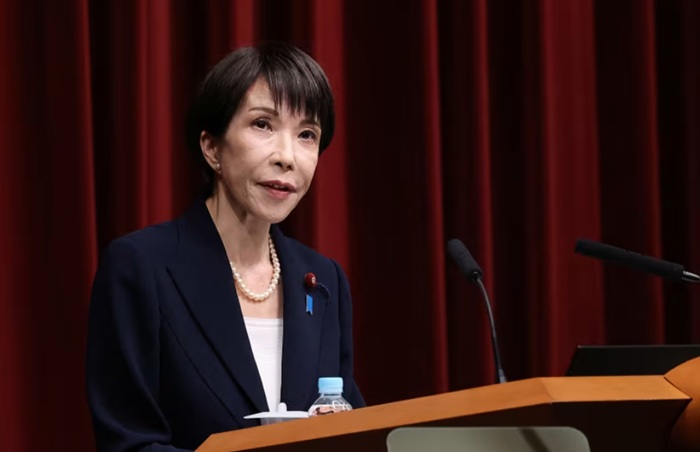
Japan’s conservative Prime Minister Sanae Takaichi swept to a landslide victory in a snap election on Sunday, marking a historic turnaround for her party, which had been hemorrhaging voter support in recent years — until she stepped to the helm.
Since she was elected more than four months ago – becoming Japan’s first female leader in a country where men have long dominated politics – Takaichi has enjoyed high approval ratings and a glowing endorsement from US President Donald Trump.
She won over many voters with her notoriously strong work ethic, savvy social media game and charisma, marked in viral moments such as a recent impromptu drum session with South Korean President Lee Jae-myung – stoking public enthusiasm to levels not seen since former Prime Minister Shinzo Abe.
It was a gamble to call a snap election. But Takaichi hoped to translate her own popularity into a stronger mandate for her Liberal Democratic Party (LDP) – which has been weakened in recent years by a scandal involving the misuse of political funds.
Her risky move paid off. The LDP won more than 310 of the 465 seats in Japan’s lower house of parliament, marking the first time since World War II that a single party has secured a two-thirds majority. The broader ruling coalition won more than 340 seats.
Crucially, the two-thirds supermajority in the lower house will allow Takaichi’s party to override votes in the upper house of parliament and to propose amendments to the constitution.
Putting her leadership on the line
Takaichi, a longtime lawmaker, rose to the top of Japanese politics last fall after her predecessor, Shigeru Ishiba, resigned amid pressure from his own party following a series of bruising defeats for the LDP.
She won the LDP presidency on October 4, her third attempt at the job, and was elected prime minister on October 21 – a surprising triumph in Japan’s deeply patriarchal political system.
Her decision to dissolve parliament three months later, she said in a January 19 press conference, was a “profoundly weighty decision,” adding that “by doing so, I am also putting my position as prime minister on the line.”
Takaichi has enjoyed unusually high approval ratings during her short tenure, in which she has made waves for her relaxed, friendly interactions with other world leaders.
During a meeting with the US president just one week into her term, Trump and Takaichi looked more like old friends than world leaders.
“She is a delight,” Trump told business leaders after they met. “I got to know her pretty well in a short period of time.”
Days before the election, Trump gave his “total endorsement” of Takaichi, writing in a post to Truth Social that she “has already proven to be a strong, powerful, and wise Leader, and one that truly loves her Country.” He added he plans to welcome Takaichi to Washington in March.
Trump also enjoyed a close bond with Takaichi’s mentor, former Prime Minister Shinzo Abe who was assassinated in July 2022.
Takaichi’s decisive leadership style and support for traditional values have drawn comparisons to Margaret Thatcher, whom she cites as inspiration.
But it hasn’t all been sunny for Japan’s first woman leader. She has been scrutinized for her relentless work schedule, which included calling a 3 a.m. meeting with aides.
Comments she made about Taiwan, the democratic island claimed by China, also cratered Tokyo’s relationship with Beijing.
Takaichi broke Japan’s long tradition of ambiguity on Taiwan when she told parliament in November that a Chinese attack on the island – which lies just 60 miles (97 kilometers) from Japanese territory – could trigger a military response from Tokyo. (CNN)