

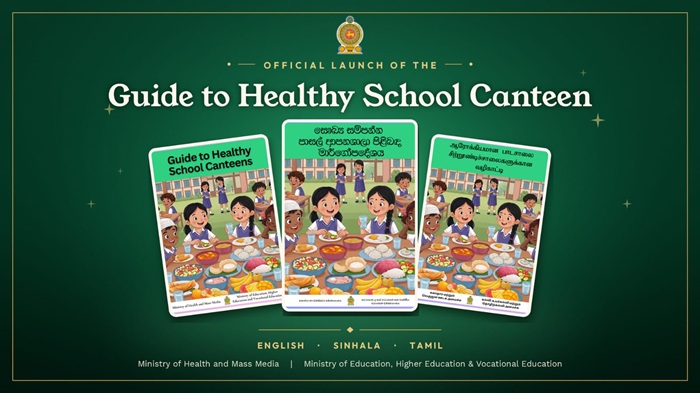
Coinciding with National Nutrition Month 2026, the Ministry of Health today (22) unveiled the “Guidelines on Healthy School Canteens”, aimed at creating student‑friendly canteens that provide affordable, safe, and nutritious meals.
According to the Health Ministry, the launch took place under the patronage of Health Minister Nalinda Jayatissa at the Faculty of Medicine Auditorium in Colombo.
Prepared with technical support from the Ministry’s Nutrition Division and in coordination with the Ministries of Education, Higher Education, and Vocational Education, the guidelines focus on five objectives:
- Ensuring a healthy school generation free from non‑communicable disease risks Providing nutritious food
- Instilling correct attitudes toward healthy eating
- Promoting dietary practices into society
- Maintaining proper canteen management and sanitation.
Addressing the event, Minister Jayatissa stressed the need to rapidly spread the message of healthy school canteens, warning that strong decisions are required to tackle Sri Lanka’s growing nutrition challenges.
He noted that while many sectors recognize the issue, reluctance remains in implementing proper measures. He also highlighted that schools must prioritize children’s nutrition over project sponsorships withdrawn by companies following food regulations.
The program is designed with the future in mind, targeting children who will form the aging population by 2070–2080. The Minister added that nutrition is central to combating non‑communicable diseases, requiring continuous intervention and shifts in public attitudes.
Alongside the launch, the Health Ministry shared statistics from 2025, which showed that among children under five, stunting stood at 10.1%, wasting at 8.65%, underweight at 16.19%, and overweight/obesity at 0.57%. Among pregnant mothers, 13.2% were underweight in the first trimester, while 14.3% suffered from moderate to severe anemia.
The 2021 STEPS survey found 47.6% of adult women and 30% of adult men overweight, with 15.2% of women and 6.3% of men obese.
Meanwhile, the 2024 Global School‑based Student Health Survey reported that many students aged 13–17 regularly consumed unhealthy foods and drinks, 17.4% drank carbonated beverages daily, 28% consumed sugar‑sweetened drinks daily, and more than 70% had fast food at least once in the past week.
Health officially stressed that these trends underscore the importance of implementing the new guidelines not only in schools but across institutions, ministries, and even high‑level meetings and ceremonies. (Newswire)