

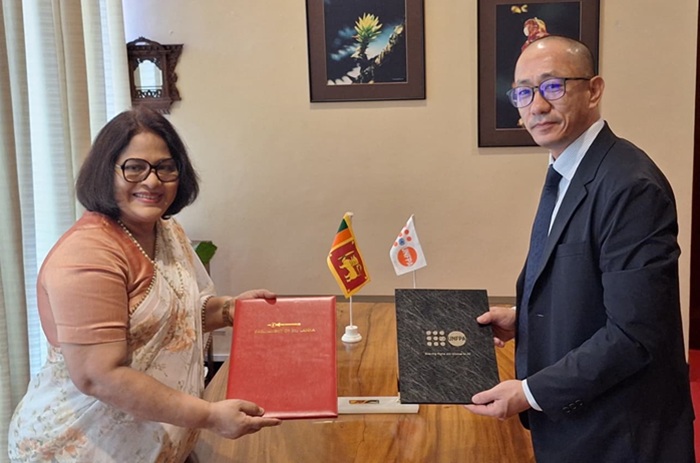
The United Nations Population Fund (UNFPA) and the Parliament of Sri Lanka have formalised a new partnership to strengthen the use of population data in policymaking, signing a Memorandum of Understanding that underscores their shared commitment to ensuring demographic trends are reflected in future legislation and national development priorities.
The agreement, signed by Parliament Secretary‑General Kushani Anusha Rohanadeera and UNFPA Sri Lanka Representative a.i. Phuntsho Wangyel, marks a milestone in efforts to prepare for challenges such as population ageing, changing family structures, and evolving development needs while advancing gender equality and protecting the rights of women and young people.
“The decisions made today will shape the lives of future generations,” said Dr. Aleksandar (Sasha) Bodiroza, UNFPA Regional Director ad interim for Asia and the Pacific. “This partnership is about ensuring that Parliament has the evidence, data and insights needed to build policies that respond to a changing population while protecting people’s rights, expanding opportunities and ensuring that no one is left behind. Demographic change is not something to fear. It is an opportunity to build a stronger, more inclusive future if we prepare for it together.”
The agreement was a key milestone during Dr. Bodiroza’s official visit to Sri Lanka from 28 June to 4 July, focused on strengthening partnerships to support the country’s long-term development priorities.
During his visit, Dr. Bodiroza also met with Prime Minister, Dr. Harini Amarasuriya; Speaker of Parliament, Dr. Jagath Wickramaratne; and Minister of Health and Mass Media, Dr. Nalinda Jayatissa. Discussions focused on strengthening health systems, advancing gender equality, supporting women and young people and preparing for Sri Lanka’s changing population landscape through evidence-based, rights-centred policies.
Dr. Bodiroza also visited communities affected by Cyclone Ditwah to observe UNFPA’s ongoing interventions to support women and girls in estate communities through reproductive healthcare, protection services and humanitarian assistance. Additional engagements with development partners, civil society organizations and the private sector reinforced the importance of broad partnerships in advancing inclusive development and ensuring that women, girls and young people can fully participate in Sri Lanka’s future.
UNFPA has partnered with Sri Lanka for more than five decades, supporting national efforts to improve maternal health, advance gender equality, strengthen population data systems and expand access to sexual and reproductive health services. The organization remains committed to working alongside the Government of Sri Lanka, Parliament and national partners to ensure that development policies are informed by evidence and centred on people’s health, rights and aspirations. (Newswire)